Smart Glass : Strong Government Support Through Mandates and Legislations for Energy-Efficient Construction
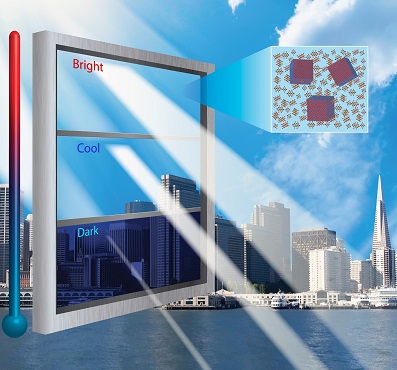
Some of the key factors driving the growth of this market are the growing demand for smart glass in automobile applications, strong government support through mandates and legislations for energy-efficient construction, and optimal energy saving through smart glass applications.
♦Download PDF Brochure@
https://www.marketsandmarkets.com/pdfdownload.asp?id=907
Governments and the policymakers across the world have started framing policies, legislations, and laws to increase the energy-efficiency of buildings. For example, the energy-efficiency directive from the European Union (EU) defines the measures to increase the efforts from member states to use energy more efficiently at all stages of the energy chain from the transformation and distribution of energy to its consumption.
The global smart glass market is expected to reach USD 8.35 Billion by 2023 from USD 3.32 Billion by 2017, at a CAGR of 16.61% between 2017 and 2023.
The directive includes the legal mandates to establish energy-efficiency obligations schemes or policy measures in all the member states. This will further drive the adoption of smart glass-enabled energy-efficient products in residential and commercial building construction, and in the transport sector, despite the higher cost of these glasses than the normal (flat) glass.
The key players in the market include SAGE Electrochromics, Research Frontiers, View, Inc., Asahi Glass Co., Gentex, Hitachi Chemical, Glass Apps, Pleotint, Polytronix, RavenWindow, Scienstry, Smartglass International, and SPD Control Systems. The key players in this market are increasingly undertaking partnerships and collaborations, and product developments and launches to develop and introduce new technologies and products in the market.