The Rise of Programmable Silicon: Unlocking Infinite Possibilities

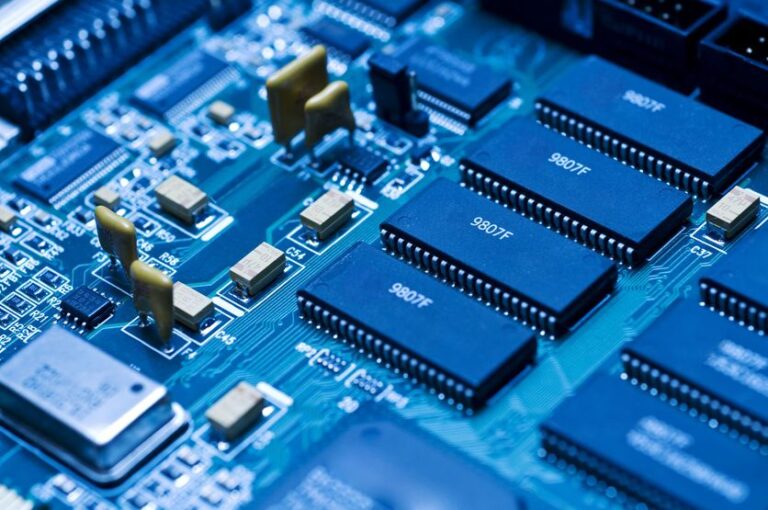
In the ever-evolving landscape of technology, one term that has been garnering significant attention is "Programmable Silicon." This cutting-edge technology is revolutionizing the world of electronics and enabling innovation across diverse industries. Programmable Silicon, often referred to as Field-Programmable Gate Arrays (FPGAs) and Application-Specific Integrated Circuits (ASICs), represents a new era in customization and adaptability.
At its core, Programmable Silicon refers to the ability to configure and reconfigure hardware after manufacturing, allowing for real-time changes to the logic and functionality of integrated circuits. Unlike traditional fixed-function chips, which serve specific purposes, programmable silicon empowers engineers and developers to tailor their hardware to meet specific application needs.
One of the primary advantages of Programmable Silicon lies in its versatility. By reprogramming the hardware, developers can fine-tune their designs to optimize performance and efficiency, reducing time-to-market for new products. This flexibility extends to a broad range of applications, including artificial intelligence, data centers, telecommunications, automotive, and beyond.
The Programmable Silicon Market has experienced significant growth and transformation in recent years. With the increasing demand Optical transceivers and switches built on Programmable Silicon platforms are revolutionizing optical networking, meeting the growing demand for higher bandwidth and faster data transmission.
In the world of AI and machine learning, programmable silicon has proven to be a game-changer. By creating custom hardware accelerators for specific algorithms, AI models can achieve unparalleled speed and energy efficiency. This has paved the way for advancements in natural language processing, computer vision, and autonomous systems.
Additionally, data centers are adopting programmable silicon to cope with the increasing demands of complex workloads. These chips enable dynamic workload allocation, making data centers more agile and adaptable to the fluctuating demands of modern computing.
Another significant advantage of programmable silicon is its potential to revolutionize the automotive industry. With the rise of autonomous vehicles, custom hardware can be designed to meet the stringent safety and performance requirements of self-driving cars, pushing the boundaries of what's possible on the roads.
As this transformative technology continues to advance, it is becoming more accessible to developers and businesses of all sizes. Cloud-based FPGA services and open-source FPGA toolchains are making it easier for engineers to experiment and implement their ideas without significant upfront investments.
The era of Programmable Silicon has arrived, and its impact is already being felt across various sectors. With its remarkable versatility, customization capabilities, and increasing accessibility, we can expect to witness a surge of innovation and advancements that will shape our future in ways we have yet to imagine.