Pioneering Safety and Efficiency Through Advanced Sensing Technology in Automotive, Industrial, and Residential Applications

Working Principle
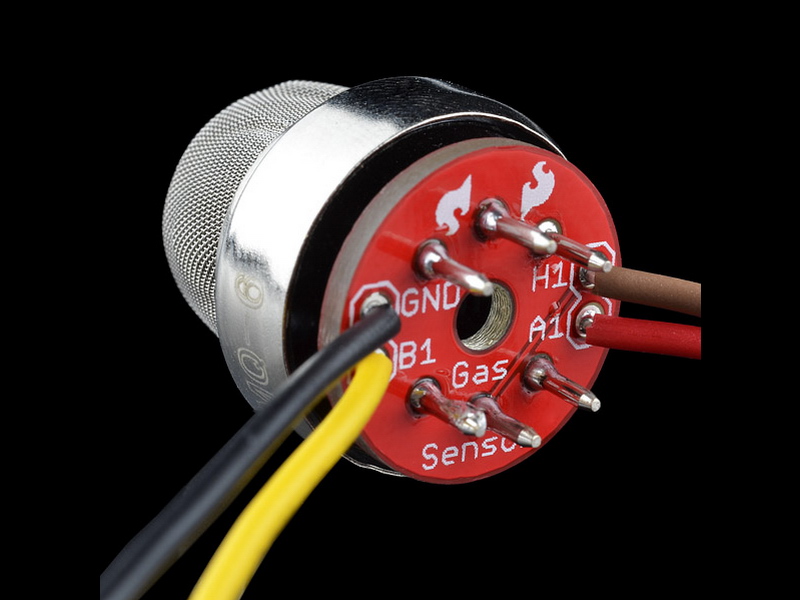
All gas sensors work on the principle of converting the chemical or physical property changes induced by target gases into useful electrical signals. The sensitive element of a gas sensor undergoes changes when exposed to target gases. This change is detected and measured by the associated electronics which then displays the concentration or presence of the target gas.
The sensitive element is usually made up of metal-oxide semiconductors, electrochemical cells, catalytic combustion sensors or solid electrolytes. When gases come in contact with the sensitive element, reactions occur which alters the conductivity or other properties of the sensing materials. This change is converter into an electric signal by the associated electronics. The signal is then processed to indicate the concentration or presence of the target gas.
Types of Gas Sensors
Based on their sensing mechanism, gas sensors can be categorized into different types:
Metal-oxide Semiconductor Sensors:
These are the most widely used gas sensors due to their low cost, simple design and fast response time. They consist of metal-oxide thin films functioning as the sensitive element. Upon exposure to target gases, reactions occur which alters the conductivity of the metal-oxide films. Gases like LPG, Carbon Monoxide, Hydrogen can be detected using these sensors.
Electrochemical Sensors:
These operate on the principle of oxidizing the target gas at an electrode and measuring the resulting current. Gases like Oxygen, Carbon Monoxide, Ammonia can be sensed accurately using electrochemical sensors. They have high sensitivity and selectivity but require frequent replacement of electrodes.
Catalytic Combustion Sensors:
These sensors detect target gases by combusting them catalytically on a platinum electrode. The heat produced is measured to determine the concentration. They are mainly used for detecting gases like Propane and Butane. However, their response time is more compared to other sensors.
Infrared Sensors:
Infrared spectroscopy is used in these sensors to identify and quantify different gases. Each Gas Sensor absorbs infrared radiation of specific wavelengths uniquely. By measuring the infrared spectra, the presence and concentration of individual gases in a mixture can be determined. Though very accurate, they are costlier compared to other types of gas sensors.
Applications of Gas Sensors
Now that we understand the working and types of gas sensors, let us discuss some of their major applications:
Industrial Safety: Gas sensors are installed at petrochemical plants, oil refineries, gas pipelines etc. to continuously monitor levels of flammable and toxic gases like methane, hydrogen, ammonia and alert about leaks or explosions risks. This improves workplace safety.
Automotive: Gas sensors play a key role in emissions monitoring and engine control of vehicles. Oxygen sensors regulate the air-fuel ratio while other sensors detect emissions gases levels to meet regulatory standards.
Home Appliances: Cooking ranges, gas stoves, heaters, boilers etc. employ sensors to shut-off the gas supply automatically in case of a leak. This prevents fire and explosion hazards at homes.
Medical Field: Oxygen and other therapeutic gas analyzers use sensors to measure the concentrations delivered to patients precisely via masks or tubes during treatments and surgeries.
Air Quality Monitoring: Network of gas sensors monitor ambient levels of pollutants like CO, NOx, VOC etc. to study their effects on climate and health. Governments also track emissions using such sensors.
Future Prospects and Conclusion
With growing automation needs across industries and buildings, the market for gas sensors is estimated reach $4 billion by 2026 according to research reports. Advancements in material sciences and MEMS technologies are enabling development of low-cost, high-performance miniaturized gas sensors with features like artificial intelligence integration. This will further drive their adoption in new areas like smart cities, IoT, agriculture, infrastructure monitoring and more. Gas sensors can play a vital role in developing safer work and living environments of the future through early detection of hazards. With continuous research and innovation, gas sensing will become more accurate, economical and ubiquitous in the coming times
Get more insights on Gas Sensor