Passive Electronic Components: Foundation of Modern Circuits

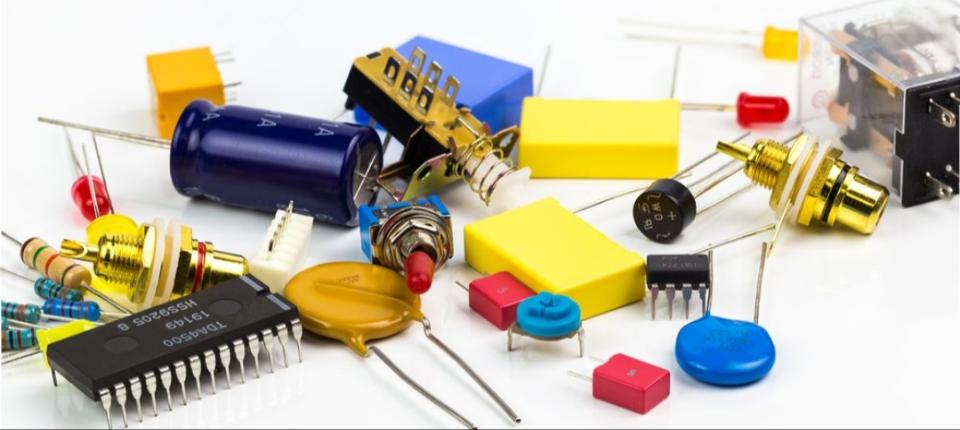
While most people are familiar with integrated circuits and active components like transistors, the unsung heroes of electronics are passive components. Passive components play a critical supporting role in virtually every electronic device and circuit. From simple resistor-capacitor timing circuits to advanced microprocessors, passive components form the backbone of modern electronics.
Resistors
As one of the simplest and most ubiquitous passive components, resistors form the basis of many circuits. Made from materials that resist the flow of electric current, resistors are used to:
- Limit current in a circuit
- Set voltage drops across components
- Act as fuses to protect other components
The most common types of resistors are:
- Carbon composition resistors: Inexpensive and widely used fixed resistors made of carbon and binder.
- Metal film resistors: Very precise fixed value resistors used where exact resistance is critical like timing circuits. Made of metal alloy films.
- Wire wound resistors: Large power handling resistors used where significant power dissipation is required. Made by wrapping resistance wire around an insulator.
Passive Electronic Components Resistors come in a very wide range of standardized resistances or ohmic values to suit different circuit needs. They are essential building blocks in virtually all circuits to limit currents and set operating voltages.
Capacitors
Capacitors serve to store electric charge and smooth voltage in circuits. Made from two conductors separated by an insulator known as a dielectric, common types include:
- Ceramic capacitors: Multilayer miniature capacitors widely used for bypassing and coupling. Inexpensive and reliable.
- Aluminum electrolytic capacitors: Low priced capacitors able to store large amounts of charge. Used for energy storage in power supply filters. Polarized.
- Tantalum capacitors: Long life version of aluminum electrolytics. More expensive. Often used for high reliability applications.
- Film capacitors: Precision non-polarized capacitors for timing applications like clocks. Made from plastic or metalized film.
By acting as temporary reservoirs of electric charge, capacitors are indispensable for power supply filtering, timing circuits, signal coupling and bypassing noise in digital and analog applications. Many circuit designs would not function without capacitors.
Inductors
Where capacitors store energy in electric fields, inductors store energy in magnetic fields as current passes through their coils. Common inductors include:
- Power inductors: Large wire wound coils used in power supplies, switching converters and equipment filters to store magnetic energy.
- RF chokes: Inductors that block radio frequencies for noise filtering purposes. Coils of insulated wire.
- Transformers: Consist of two or more inductively coupled coils used to adjust AC voltages and isolate circuits.
The properties of inductance cause inductors to resist changes in current flowing through them. As a result, inductors are used to:
- Smooth current flow in power supplies
- Block high frequencies for filtering
- Adjust signal levels in circuits
- Couple circuits through electromagnetic induction
Inductors play enabling roles across many applications from switching power supplies to radio frequency circuitry. Combined with capacitors they form the LC timing elements crucial to resonant circuits.
Get More Insights on this Topic- https://www.marketwebjournal.com/passive-electronic-components-vital-but-unappreciated-parts-of-modern-electronics/
Explore More Related Articles- https://masstamilan.tv/industrial-dryers-advancing-process-efficiency-in-manufacturing-industries/