Oscilloscopes: Capturing Signals in the Realm of Electronics

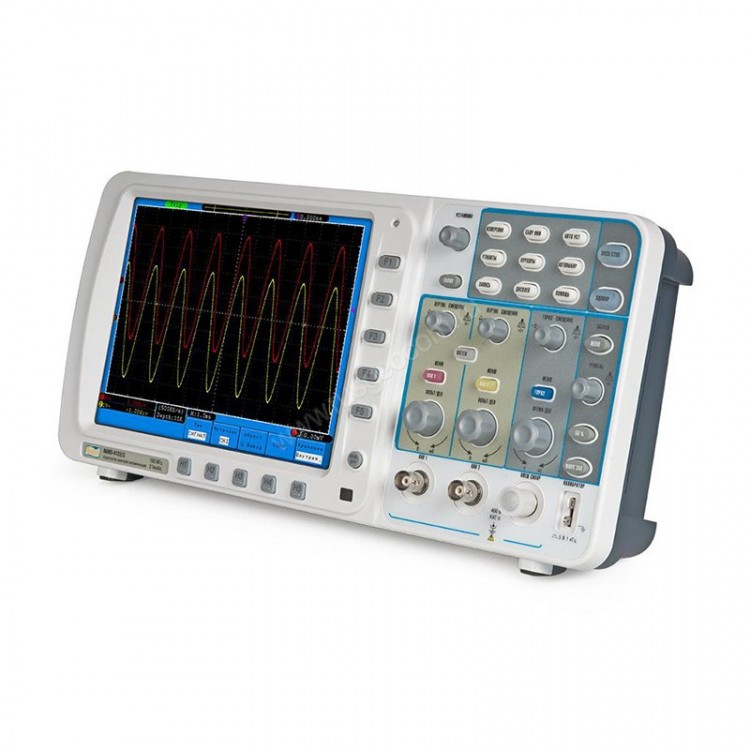
In the fascinating realm of electronics, where signals and waveforms dominate, oscilloscopes serve as invaluable tools for engineers and technicians. An oscilloscope, commonly referred to as an "oscope," is a versatile electronic instrument used to visualize and analyze electrical signals in real-time. It displays waveforms graphically, providing insights into the amplitude, frequency, and shape of the signals. This powerful device has found its way into a wide range of applications, from electronics design and troubleshooting to telecommunications and medical diagnostics.
One of the primary functions of an oscilloscope is to capture and display voltage waveforms. When connected to a circuit, the oscilloscope's probe collects voltage variations over time and plots the data on a screen, creating a visual representation of the signal. Engineers can analyze the waveforms to identify various characteristics, such as peak voltages, periods, frequencies, and time delays. With this information, they can troubleshoot electronic circuits, detect abnormalities, and verify the functionality of electronic components. Oscilloscopes are instrumental in debugging complex systems, enabling engineers to pinpoint and rectify issues swiftly and effectively.
Moreover, oscilloscopes have evolved to meet the demands of modern technology. Digital oscilloscopes, equipped with advanced processing capabilities, offer features like waveform analysis, automatic measurements, and storage capabilities. These digital oscilloscopes enable engineers to capture, save, and analyze vast amounts of data, making them essential tools for in-depth signal analysis. Additionally, the ability to trigger on specific events allows engineers to capture rare or intermittent signals that may otherwise go unnoticed. With features like fast Fourier transform (FFT) analysis, oscilloscopes can even decode and analyze complex signals in the frequency domain, providing deeper insights into the behavior of electronic systems.
In conclusion, oscilloscopes hold a central position in the world of electronics, serving as indispensable instruments for signal visualization and analysis. From detecting faults in electronic circuits to validating waveform integrity and optimizing system performance, oscilloscopes play a vital role in the design, testing, and maintenance of a wide range of electronic devices and systems. As technology continues to evolve, oscilloscopes will continue to adapt and improve, empowering engineers and technicians to unravel the mysteries of signals and waveforms in the dynamic and ever-evolving realm of electronics.