Advances in Mannequin-Based Simulation: Enhancing Realism and Efficiency in Training and Research

Introduction
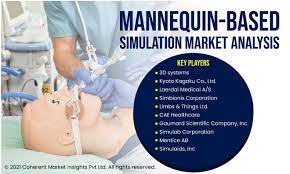
Mannequin-based simulation has emerged as a powerful tool in various fields, such as healthcare, aviation, defense, and manufacturing, to name a few. This technology involves the use of sophisticated mannequins or human simulators that mimic real-life scenarios, allowing users to practice skills, conduct experiments, and evaluate performance in a controlled environment. Over the years, significant advancements have been made in mannequin-based simulation, leading to increased realism and improved efficiency in training and research.
Realism in Mannequin-Based Simulation
One of the primary goals of mannequin-based simulation is to provide a realistic representation of real-life situations. Technological advancements have led to more sophisticated mannequins that closely resemble human anatomy and physiology. High-fidelity simulators can simulate various bodily functions and responses, including breathing, pulse, and even sweating. These features contribute to a more immersive and authentic training experience for learners.
Furthermore, advances in sensory feedback systems have greatly improved the realism of mannequin-based simulation. Simulators now have the capability to provide haptic feedback, enabling users to feel the resistance and forces associated with specific tasks. For example, in medical training, trainees can experience the sensation of performing a procedure, such as inserting a needle or conducting a surgery, on a realistic mannequin.
Integration of Artificial Intelligence
Artificial Intelligence (AI) has played a pivotal role in enhancing mannequin-based simulation. AI algorithms can control the behavior of the mannequins and adapt their responses based on user interactions. This dynamic responsiveness allows simulators to mimic human patients' reactions, adding an element of unpredictability to the simulation. AI integration also enables personalized training, as the simulator can adjust the difficulty level according to the user's proficiency.
Efficiency in Training and Research
Mannequin-based simulation offers several advantages in terms of efficiency. In the context of training, it allows learners to practice critical skills without risking harm to real patients or incurring additional costs associated with using specialized equipment. Medical students, for instance, can practice complex procedures repeatedly on simulators before performing them on actual patients, leading to improved competence and confidence.
Moreover, mannequin-based simulation offers a safe environment to evaluate the performance of individuals and teams. In fields like aviation and defense, simulators can replicate challenging scenarios, such as emergency landings or combat situations, to assess how pilots or soldiers respond under pressure. By analyzing the simulation data, instructors and researchers can identify areas for improvement and tailor training programs accordingly.
Interdisciplinary Applications
Another notable advancement in mannequin-based simulation is its increasing interdisciplinary applications. While the technology initially gained traction in medical and healthcare settings, it has now expanded to various industries. In disaster response training, mannequin-based simulations can simulate mass casualties and help emergency responders practice triage and coordination. In manufacturing, simulators are used to train workers in operating complex machinery and handling hazardous materials safely.
Conclusion
Advances in mannequin-based simulation have significantly transformed training and research across various fields. The increasing realism of simulators, driven by technological advancements, has created more immersive and authentic training experiences. Integrating AI has further elevated the capabilities of mannequins, making them responsive and adaptable to users' actions. Moreover, the efficiency and safety of mannequin-based simulation have led to its widespread adoption across multiple disciplines, fostering continuous learning and improvement. As technology continues to evolve, mannequin-based simulation is poised to play an even more significant role in shaping the workforce's skills and enhancing safety standards in the years to come.