NLP APPLICATIONS IN BUSINESS
Natural Language Processing (NLP) is an integral area of computer science of artificial intelligence—a way of communication via speech, text, virtual conversation and messaging or, putting it simply, the combination of artificial intelligence and computational linguistics.
There are two main areas of natural language processing. One is where the computer assigns the meaning of language it has received, which is called Natural Language Understanding (NLU), and the other one is where the process converts the information gathered from the computer's language to human language also known as Natural Language Generation (NLG).
HOW NLP WORKS?
Converting written or spoken human speech into an acceptable and understandable for computer form are natural language processing techniques that are deemed effective and highly valuable for businesses.
NLP business applications are used so commonly these days in different forms and a few of NLP examples are spell checkers, online search, translators, voice assistants, spam filters, autocorrect and many more.
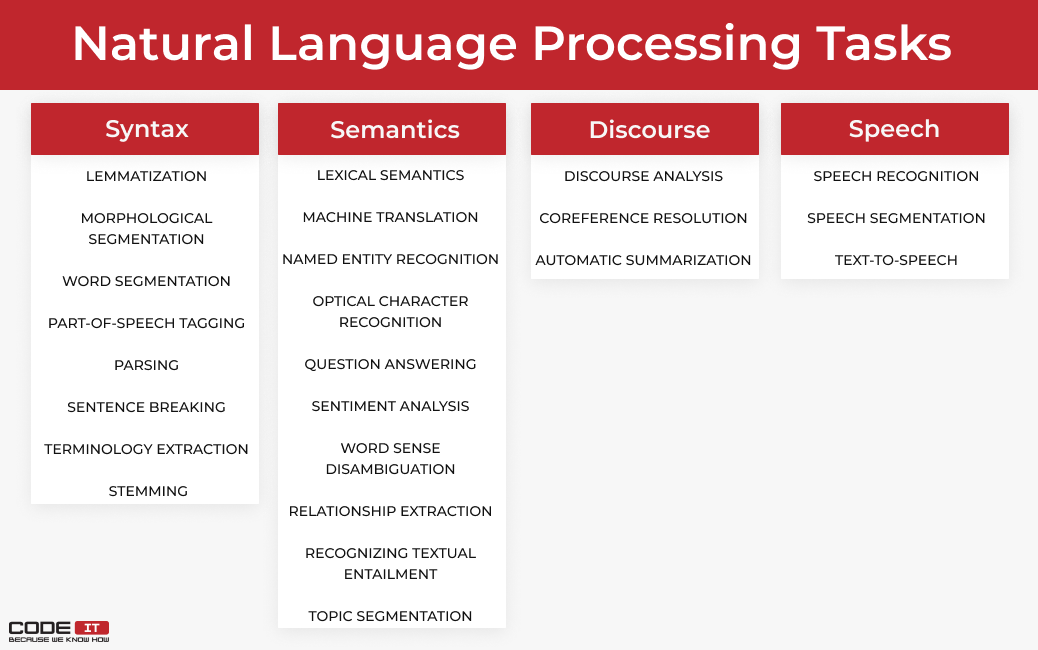
There are different natural language processing researched tasks that have direct real-world applications while some are used as subtasks to help solve larger tasks. Here's a list of the following most common tasks in NLP.
Natural Language Processing Tasks
TOP NLP USE CASES IN BUSINESS
1. Machine Translation – One of the widely used applications of deep learning in NLP is machine translation. With this, automatic translation developed in computer algorithms is possible without getting humans involved in the process. This then highly affects businesses when translating low-impact content such as product reviews, regulatory documents, and emails quickly. The best-known applications for machine translation are Google Translate and Amazon Translate.
2. Speech Recognition - It may have been around for a long time now but only in the last few decades it has achieved significant success with different software programs decoding the human voice using mobile telephony, home automation, hands-free computation, virtual assistance, video games and many more. Speech Recognition tools that were developed with the aid of Natural Language Processing is widely applied in companies as they create intelligent voice-driven interfaces for chosen systems in their field of business.
3. Sentiment Analysis - It tackles people's inclination about certain topics or services making this option helpful in various businesses. It is responsible for checking whether goods or services satisfy customers, create polls for brands and even political candidates. This does not just help companies acquire knowledge on how customers perceive them but also allows for improvement in concepts, products, marketing, and advertising while reducing the level of dissatisfaction.
4. Question Answering - Questions by humans using natural language can have answers provided by question answering wherein this NLP application identifies the speech given and formulates a response in return. Examples of question answering applications are Siri, OK Google, and Virtual Assistants.
5. Chatbots – They proved to be able to handle standard tasks. Chatbots are highly efficient in both business and consumer sides helping answer various queries when needed. However, businesses today push further into developing chatbots so that they could communicate on a human level in all its complexity. Chatbots are helpful for business when it comes to improving customer experience and satisfaction.
6. Spam Filters – A common use case of Natural Language Processing are Email Filters. This functions blockers for unwanted emails filtering out those that are non-spam from spam emails by extracting the meaning and frequency of certain words detected in the body of an email.
7. Information Extraction – A Natural Language Processing system that aims to gather and extract collated relevant information in a quick manner that can be used efficiently in the development and improvement of various businesses. Information extraction makes use of unstructured data from social media conversations, emails and interactions with customer service representatives and converting it into accessible data facilitating the decision making of businesses through advanced algorithms and software applications.
In what business area can you apply NLP? Find out in our article NLP Uses in Business