Spatial Omics: Unraveling the Hidden Mysteries of Cellular Landscapes

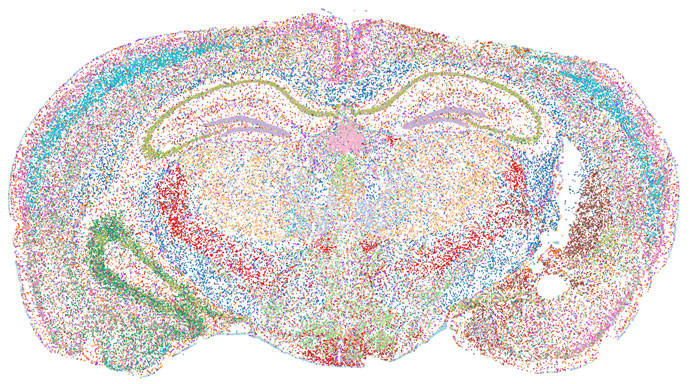
In the rapidly evolving world of biomedical research, cutting-edge technologies are continually pushing the boundaries of our understanding of biology. One such breakthrough that has revolutionized the study of cellular organization and function is Spatial Omics. This innovative approach allows scientists to unravel the hidden mysteries of cellular landscapes in unprecedented detail. In this blog, we will explore what Spatial Omics is, how it works, and the potential it holds for advancing our knowledge of complex biological systems.
What is Spatial Omics? Spatial Omics is a multidisciplinary field that combines traditional omics technologies, such as genomics, transcriptomics, and proteomics, with high-resolution spatial information. Unlike conventional omics techniques, which provide a global view of cellular components, Spatial Omics allows researchers to map the molecular profiles of individual cells in their native spatial context within tissues and organs.
How Does Spatial Omics Work? The key to Spatial Omics lies in preserving the spatial information of biomolecules within tissues. Techniques such as spatial transcriptomics, spatial proteomics, and spatial genomics enable the simultaneous analysis of thousands of molecules within their precise location in the tissue. These technologies use advanced imaging methods and specialized probes or barcoding strategies to tag and identify specific molecules within the tissue sample.
Applications and Advantages: Spatial Omics has opened up exciting possibilities across various biological and medical fields. Some of the key applications and advantages include:
-
Understanding Tissue Complexity: Spatial Omics allows researchers to decipher the intricate organization of different cell types within tissues and organs. It provides insights into cell-cell interactions, signaling pathways, and the spatial distribution of specific biomolecules.
-
Disease Research: By studying the spatial patterns of molecular alterations in diseased tissues, scientists can gain a deeper understanding of diseases' underlying mechanisms. This information can lead to the identification of new biomarkers and potential therapeutic targets.
-
Drug Development: Spatial Omics can be invaluable in assessing the effects of drugs on specific cell types within tissues, enabling more targeted and effective drug development.
-
Personalized Medicine: By characterizing the spatial heterogeneity of tumors and other diseases, Spatial Omics can contribute to personalized treatment strategies, tailoring therapies based on individual patients' unique molecular profiles.
-
Neuroscience: In the field of neuroscience, Spatial Omics helps elucidate the complex architecture of the brain and shed light on how different cell types and neural circuits function together.
Challenges and Future Prospects: Despite its immense potential, Spatial Omics still faces some challenges. The techniques involved are technically demanding and require sophisticated computational tools for data analysis. Additionally, as the field is relatively new, standardization and integration of data from different platforms are ongoing areas of research.
Looking ahead, the future of Spatial Omics holds great promise. As technologies continue to advance, we can expect higher resolution and more comprehensive spatial maps of cellular landscapes. This will deepen our understanding of biology, improve disease diagnosis and treatment, and pave the way for groundbreaking discoveries.
In conclusion, Spatial Omics represents a powerful new frontier in biomedical research. By combining the power of omics technologies with spatial information, scientists can unlock the secrets of cellular organization and function, providing a more comprehensive understanding of complex biological systems and opening up new avenues for advancing human health. As the field continues to advance, we eagerly anticipate the transformative discoveries that lie ahead.