Revolutionizing Laboratory Efficiency: The Power of Automated Liquid Handling Systems

Laboratories play a crucial role in scientific research and development across various fields, from pharmaceuticals and biotechnology to academic research and diagnostics. As the complexity and scale of experiments increase, the demand for precision, accuracy, and efficiency in liquid handling becomes paramount. In response to these challenges, automated liquid handling systems have emerged as game-changers, revolutionizing laboratory practices and significantly enhancing productivity and reproducibility.
What are Automated Liquid Handling Systems?
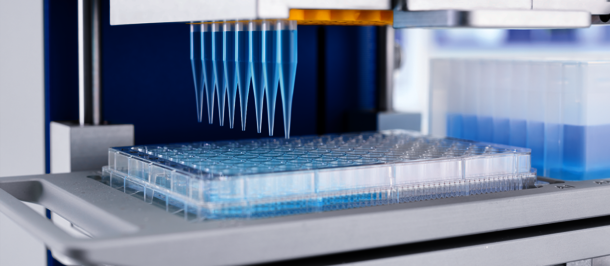
Automated liquid handling systems are sophisticated robotic platforms designed to precisely and accurately handle small volumes of liquids, such as reagents, samples, and diluents, with minimal human intervention. These systems integrate advanced robotics, software control, and various dispensing technologies, including multi-channel pipettes, syringe pumps, and dispensing arms, to automate repetitive liquid handling tasks.
Enhanced Precision and Accuracy
One of the key advantages of automated liquid handling systems is their unparalleled precision and accuracy. Unlike manual pipetting, which can be prone to human errors, automated systems offer consistent and reliable results, reducing the risk of cross-contamination and contamination. The systems can pipette volumes ranging from microliters to milliliters with high repeatability, enabling researchers to perform experiments with utmost confidence in their data.
Increased Throughput and Efficiency
In modern laboratories, researchers often face tight timelines and a high demand for productivity. Automated liquid handling systems excel in handling high-throughput workflows, significantly accelerating experimental processes. These systems can efficiently process large batches of samples and reagents, eliminating tedious manual tasks and freeing up researchers' time for more intellectually challenging aspects of their work.
Workflow Standardization and Reproducibility
Standardization and reproducibility are vital pillars of scientific research. Automated liquid handling systems help maintain consistent protocols, ensuring that experiments are performed identically every time they are run. This not only enhances the reproducibility of results but also allows researchers to compare data from different experiments with confidence, facilitating collaboration and data sharing.
Minimized Risk of Exposure and Contamination
Handling hazardous substances or infectious agents can pose significant risks to laboratory personnel. Automated liquid handling systems can mitigate these risks by reducing the need for direct contact with hazardous materials. Additionally, the systems are designed with appropriate safety features to prevent spills and minimize the chance of contamination, making laboratories safer environments for both researchers and the public.
Flexibility and Versatility
Automated liquid handling systems are highly adaptable to different experimental requirements. With the ability to program complex protocols, these systems can cater to a wide range of applications, from simple serial dilutions to complex assay preparations and high-throughput screening. As research needs evolve, laboratories can easily reprogram the systems to accommodate new workflows and experimental setups.
Data Tracking and Documentation
In an era where data integrity and traceability are of utmost importance, automated liquid handling systems offer robust data tracking and documentation capabilities. Every step of the liquid handling process, including volume dispensed, tip changes, and instrument calibration, is recorded automatically. This ensures full transparency and audit trails, making it easier for researchers to identify and troubleshoot potential issues.
Conclusion
Automated liquid handling systems represent a transformative technology that has revolutionized laboratory efficiency and productivity. By combining precision, accuracy, throughput, and flexibility, these systems empower researchers to tackle complex challenges in various scientific disciplines. As technology continues to advance, we can expect even more innovative developments in the field of automated liquid handling, further enhancing laboratory capabilities and driving groundbreaking discoveries.