Nitinol Medical Devices: A Shape-Shifting Revolution in Healthcare

Introduction
In the world of medical devices, innovation knows no bounds. Among the remarkable materials shaping the future of healthcare is Nitinol, a unique alloy with extraordinary properties. Nitinol's shape-memory and superelasticity characteristics have propelled it to the forefront of medical device engineering. In this blog, we will explore the marvels of Nitinol medical devices, their applications, and how they are revolutionizing patient care and treatment outcomes.
1. Understanding Nitinol
Nitinol is a shape-memory alloy composed primarily of nickel and titanium. Its name originates from its components - "Nickel Titanium Naval Ordnance Laboratory." Discovered in the 1960s, Nitinol's most remarkable feature is its ability to remember and return to a predetermined shape when subjected to specific stimuli, such as temperature changes or mechanical forces. Additionally, Nitinol exhibits superelasticity, allowing it to endure significant deformation and return to its original form without permanent damage.
2. Advantages of Nitinol Medical Devices
The unique properties of Nitinol have made it an invaluable material in medical device manufacturing for several reasons:
a. Precision and Flexibility: Nitinol devices can be precisely shaped and manipulated to fit complex anatomical structures, allowing for minimally invasive procedures and enhanced surgical outcomes.
b. Biocompatibility: Nitinol is biocompatible and does not cause adverse reactions in the human body. This property is crucial for implantable medical devices, ensuring long-term compatibility and reduced risk of rejection.
c. Durability and Longevity: Nitinol medical devices are highly durable and resistant to corrosion, making them suitable for long-term implantation and repeated use.
d. Versatility: Nitinol's versatility enables its application in a wide range of medical devices, including stents, guidewires, filters, orthopedic implants, and even surgical instruments.
3. Nitinol Stents: Supporting Vascular Health
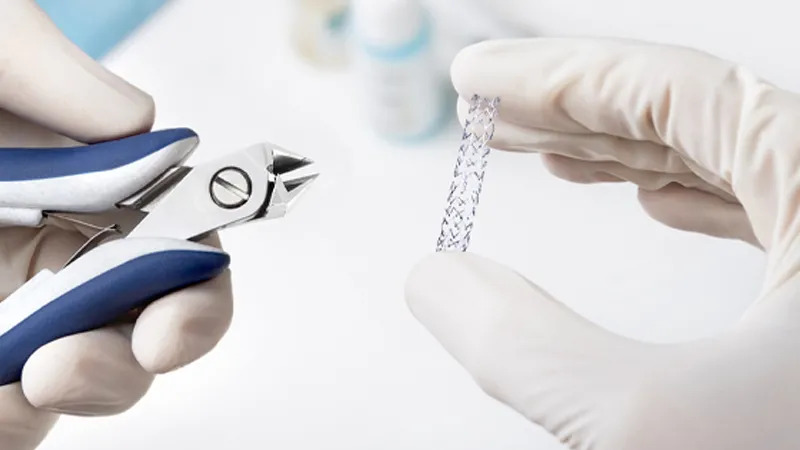
One of the most significant applications of Nitinol in medicine is in the design and fabrication of stents. Nitinol stents are self-expanding devices that can be compressed into a smaller delivery profile during insertion and then expand to their original shape upon deployment in the body. This feature allows for less invasive procedures and reduces the risk of vessel trauma during placement.
Nitinol stents find extensive use in vascular interventions to treat conditions such as coronary artery disease, peripheral arterial disease, and venous disorders. They provide structural support to keep narrowed or blocked vessels open, restoring blood flow and preventing complications.
4. Nitinol Guidewires: Navigating Precision
Nitinol guidewires are essential tools in interventional procedures. Their superelasticity enables them to navigate tortuous vascular pathways with precision, facilitating the placement of catheters and other devices. Nitinol guidewires are particularly valuable in challenging cases where conventional guidewires may be insufficient or pose risks.
5. Orthopedic Implants: Supporting Mobility
In orthopedics, Nitinol's shape-memory properties have found application in the design of shape-memory staples and fixation devices used in bone repair and fusion surgeries. These implants adapt to the patient's anatomy, providing optimal stability and support during the healing process.
6. Future Innovations and Challenges
As technology and research continue to advance, Nitinol medical devices hold promise for even more groundbreaking applications. Challenges, such as cost considerations and fine-tuning manufacturing processes, are being addressed to make Nitinol devices more accessible and widely available.
Conclusion
Nitinol medical devices represent a remarkable leap in medical engineering, offering unique capabilities that enhance patient care and surgical outcomes. From cardiovascular interventions to orthopedic surgeries, Nitinol's shape-memory and superelasticity properties have redefined the possibilities of medical device design and functionality. As research and innovation progress, we can expect Nitinol to continue revolutionizing healthcare, enabling more minimally invasive procedures, better patient outcomes, and improved quality of life for countless individuals worldwide. With Nitinol as a guiding force, the future of medical devices looks bright, promising, and adaptable to the ever-evolving needs of modern healthcare.