Microfluidic: Controlling Fluids on a Small Scale

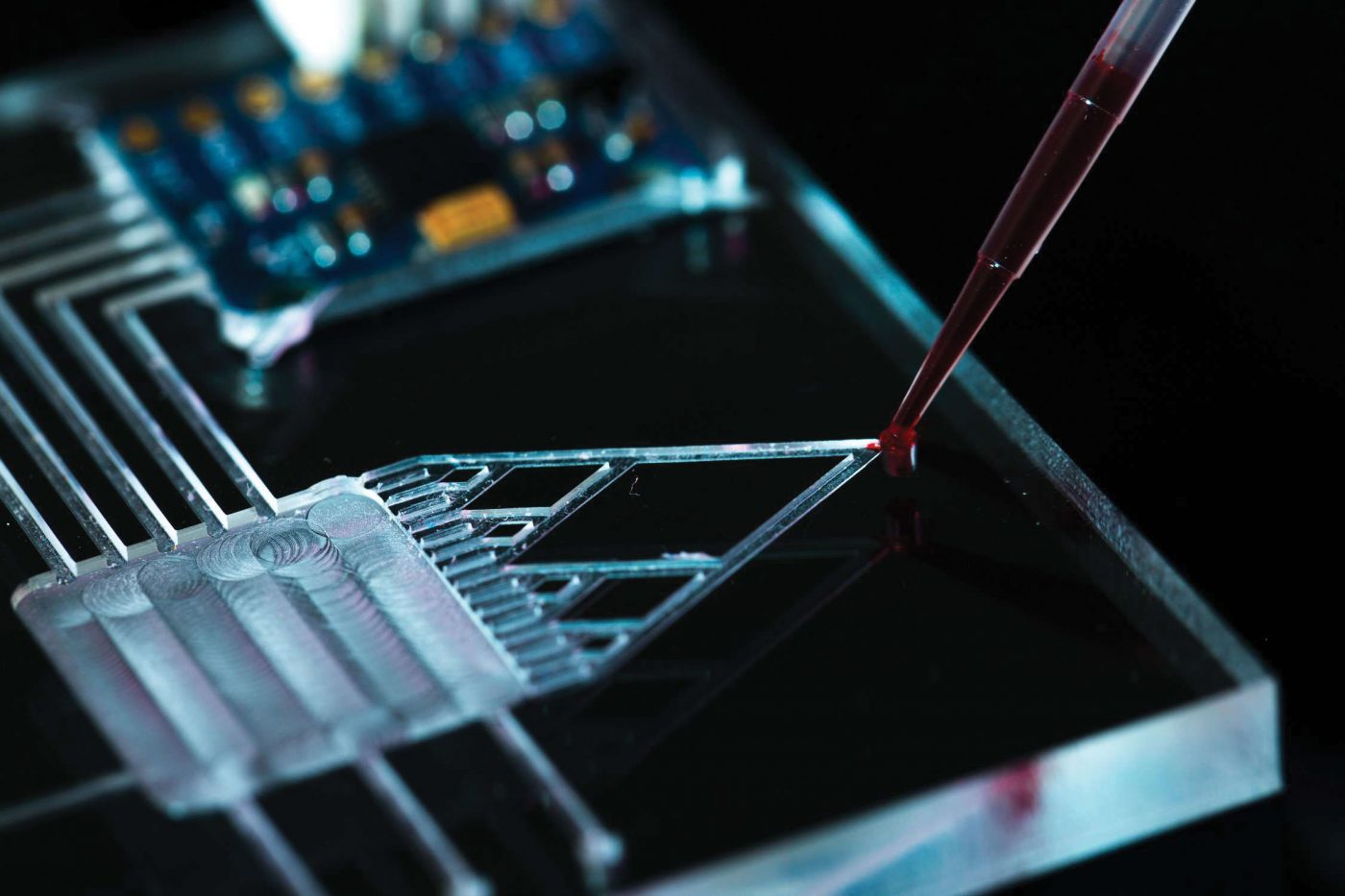
Microfluidic is an emerging field that involves the precise control and manipulation of fluids at the microscale and nanoscale levels. Researchers are exploring how microfluidic technologies can revolutionize numerous areas such as healthcare, biotechnology, and more.
What is Microfluidic?
Microfluidic refers to the behavior, precise control, and manipulation of fluids that are geometrically constrained to be in the micro-liter range. In microfluidic applications, at least one of the relevant linear dimensions (length, width, or depth) is in the micrometer range.
Microfluidic systems utilize flow channels that are narrow, typically on the order of tens to hundreds of micrometers wide. The small size of the channels allows researchers to handle extremely small fluid volumes, down to the nano- and picoliter range.
The small size scales involved in Microfluidic allow scientists to investigate fluid flow at the molecular level. Due to effects like laminar flow, mixing in Microfluidic usually relies on molecular diffusion rather than turbulent mixing as in conventional macroscale fluid dynamics. This makes microfluidic systems useful for studying biochemistry, molecular interactions, and more.
How are Microfluidic Chips Made?
Microfluidic typically employs microfabrication techniques originally developed for the semiconductor industry, such as photolithography, wet etching, and soft lithography. This allows complex fluidic circuits and three-dimensional fluidic structures to be fabricated from silicon, glass, polymers, or other materials.
There are several common methods for fabricating microfluidic chips:
- Photolithography and wet/dry etching is used to etch flow channels into materials like glass, quartz, or silicon wafers. Photoresist is patterned onto the substrate through a photomask and then etched.
- Soft lithography uses replica molding to pattern flow channels in elastomeric polymers like polydimethylsiloxane (PDMS). A photodefinable "master" is etched and PDMS is poured and cured onto the master.
- Laser micromachining employs lasers like femtosecond lasers to ablate materials with precision, forming three-dimensional structures. Lasers can machine glass, silicon, ceramics and more.
- 3D printing technologies like stereolithography are being explored to 3D print entire microfluidic devices layer-by-layer in polymers or other materials.
Applications of Microfluidic in Healthcare
The healthcare industry is poised to benefit tremendously from microfluidic technologies. Some promising applications include:
- Lab-on-a-chip devices can miniaturize diagnostic laboratories onto a single microchip. By integrating sample preparation, biochemical analysis, and detection, LOC chips can provide fast, portable medical testing.
- Microfluidic diagnostics can detect diseases through biomarkers, performing extremely sensitive immunoassays, DNA analyses, pathogen detection and more from minute sample volumes. Portable microfluidic PCR and sequencing could enable molecular diagnostics at the point-of-care.
- Organ-on-a-chip devices mimic human physiology by replicating the functions and mechanical properties of living organs and organ systems on a microfluidic chip. This enables more realistic disease modeling and drug development/testing.
- Microfluidic cell sorting chips can separate, isolate and phenotype rare circulating tumor cells with high purity from blood samples. This aids in liquid biopsy for personalized cancer care.
- Microfluidic drug delivery and perfusion technologies could enable localized, controlled drug delivery as well as microphysiological testing of drug efficacy, metabolism, and toxicity.
Beyond Healthcare: Microfluidic in Other Fields
Microfluidic has applications well beyond just healthcare, changing industries from biotechnology to material science:
Biotechnology - Microfluidic tools are used for cell cultivation, single-cell analysis, enzyme assays, high-throughput screening, microalgae and microbial cultivation, and more. They enable automation and parallelization of bioprocesses.
Chemistry - Microreactors harness laminar flow to conduct chemical and materials syntheses with precise control of reagent mixing times down to milliseconds. This accelerates reaction development and discovery.
Environmental Monitoring - Lab-on-chip sensors couple to microfluidic sample prep for fast, sensitive detection of contaminants, toxins, heavy metals and other targets from air, water and soil samples.
Automation - Microfluidic fluid handlers are becoming important tools for high-throughput automation in areas like synthetic biology, genomics and analytical chemistry. They assist with liquid dispensing, dilution, mixing and more.
Material Science - Microfluidic printing enables 3D printing of advanced materials with spatial control at micron/nano scales. Microfluidic stretchers study mechanical properties at the microscale.
The Future of Microfluidic
As microfluidic fabrication techniques continue advancing, the future potential of this field seems limitless. More widespread clinical adoption of microfluidic diagnostics could revolutionize healthcare globally.
Mass production technologies may arise to manufacture microfluidic chips at low costs. Interfacing Microfluidic with 3D printed components could open up whole new directions. Integration of Microfluidic with nanotechnologies like nanofluidics promises to expand capabilities down to single molecule levels.
get more insights on this Topic- https://www.marketwebjournal.com/microfluidic-tiny-fluids-in-a-miniaturized-world/