Terrestrial Trunked Radio: Revolutionizing Communication in Public Safety

History and Development
Terrestrial Trunked Radio (TETRA) has revolutionized communication in public safety, transportation and utility sectors over the past few decades. TETRA was initially developed in the 1990s as an open international standard for digital mobile radio communications by the European Telecommunications Standards Institute (ETSI). The goal was to create an interoperable digital mobile radio system that offered better spectral efficiency, security and functionality compared to first-generation analog systems. Major public safety agencies, transportation operators and utilities across Europe actively participated in the development and refinement of the TETRA standard.
Early Adoption and Deployment in Europe
The first TETRA network went operational in Switzerland in 1997 for air traffic control communications. Many other European countries soon followed suit, deploying national TETRA networks for critical communications systems of public safety agencies like police, fire, ambulance and disaster relief forces. TETRA networks were also rolled out by large railway operators, metro networks, ports and utility companies for mission-critical staff communications. By the early 2000s, TETRA had established itself as the dominant digital mobile radio technology across Europe, providing secure and reliable communication capabilities to hundreds of thousands of first responders and field staff.
Global Proliferation and Enhanced Capabilities
With growing success and adoption in Europe, the TETRA standard gained international recognition in the 2000s. Many countries outside Europe implemented TETRA-based digital mobile radio infrastructures to serve public safety, mass transit and utility sectors. Enhancements were continuously made to the TETRA standard to incorporate new technologies and add capabilities like data networking, location tracking and integration with dedicated LTE networks. Recent TETRA specifications support broadband multimedia services with quality of service controls for real-time voice, video and data exchanges. The fully interoperable nature of TETRA also enables seamless communication between regional networks deployed across multiple jurisdictions or countries during large-scale emergency incidents.
Current Usage and Future Potential
Today, Terrestrial Trunked Radio networks cover over 80 countries globally and serve over 500 critical communications agencies, transportation operators and utilities organizations. An estimated 5-10 million TETRA subscriber devices and system infrastructure equipment units are deployed worldwide. Innovations happening in LTE broadcasting, 5G technologies and multi-network integration could significantly expand TETRA’s potential in future. Hybrid TETRA systems integrated with dedicated LTE networks promise greater voice, video and data capacities while retaining TETRA’s core capabilities. Ongoing standardization of Mission Critical Push-to-Talk over LTE is also opening up opportunities for TETRA migration to advanced broadband networks. So while the core technology remains rooted in conventional radio systems, TETRA continues to evolve strategically by leveraging benefits of IP networks and newer wireless standards to future-proof critical communications.
TETRA Technology and Operations
Key Elements of TETRA Architecture and Design
TETRA is defined by a layered architecture comprising the radio frequency subsystem, infrastructure network, network and switching subsystem, management system, user devices and applications layers. The radio spectrum for TETRA is usually allocated in either VHF or UHF frequency ranges, providing the appropriate signal propagation characteristics for mobile radio coverage. Transmissions use 25 kHz channel spacings with advanced digital modulation techniques for spectral efficiency.
TETRA networks consist of base transceiver stations connected by a fixed infrastructure of transmission links. Each base station coverage cell operates as a switched digital trunked radio system, dynamically allocating scarce radio channels across cells using frequency or time-division schemes. Mobile data functionality is achieved through a separate packet data network subdivisional to mobile switching centers and dedicated packet control units. Comprehensive network management capabilities are built into the infrastructure layer for configuration, fault management, statistical reporting and security controls.
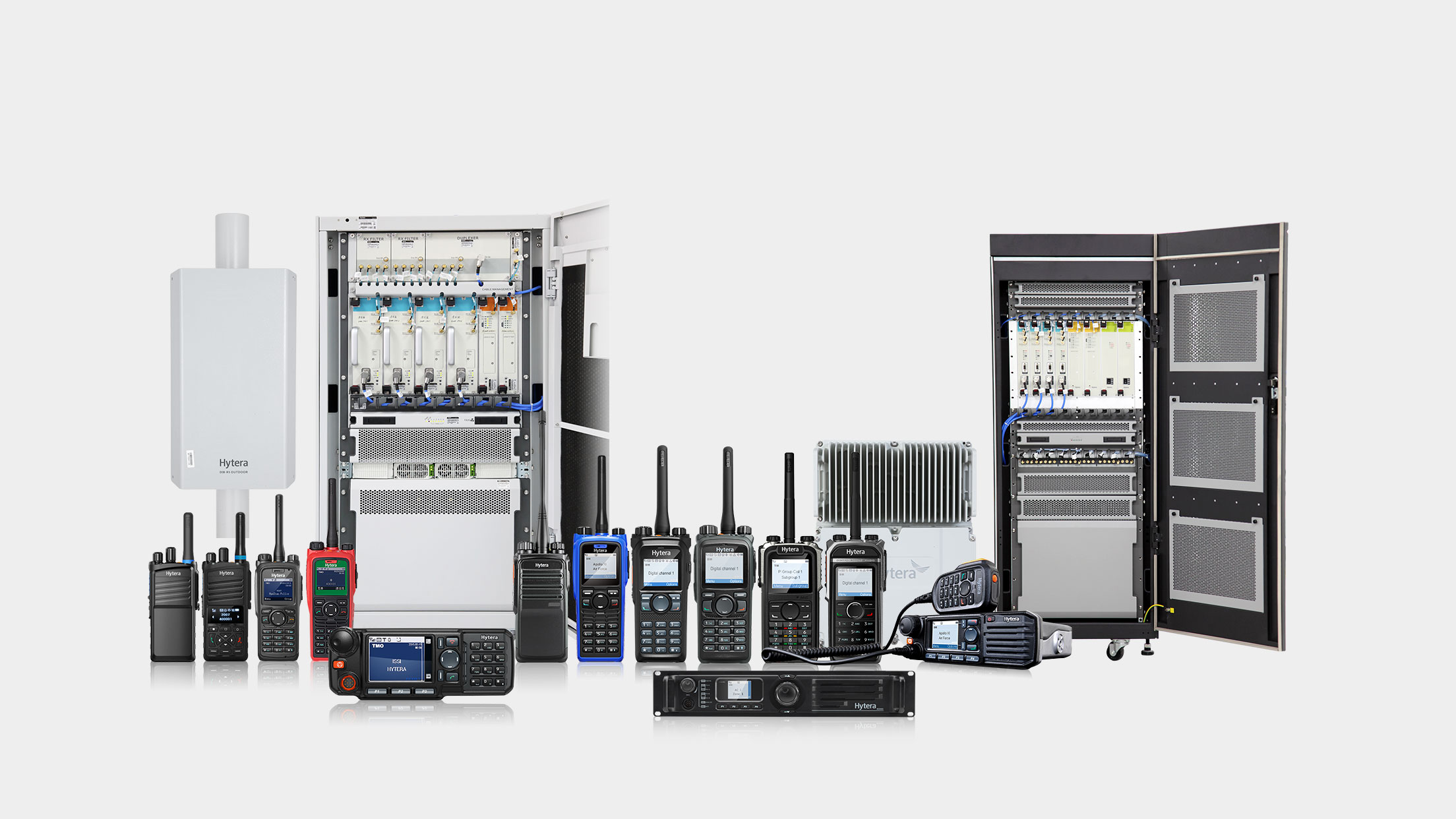
TETRA mobile terminals include handheld and vehicle-mounted radios with displays and control keypads tailored for public safety, transportation or utilities applications. Standard terminal types support both basic voice services along with advanced data options like text messaging, status updates, graphical interface applications and location services. System encryption is embedded at both the infrastructure and terminal layers, allowing secure group calls, private calls and messaging capabilities to be delivered over TETRA networks.
Benefits of TETRA Technology
TETRA has succeeded primarily due to its advantages over legacy analog systems in providing essential capabilities for critical communications users. Digital trunking optimizes scarce radio spectrum for large-scale deployments, allowing an agency to pool its useable frequencies into a single system. TETRA’s transmission encryption ensures conversations and network signaling remain confidential from unauthorized access. Group calling permits rapid one-to-many broadcast announcements while individual calls offer privacy. Seamless inter-cell roaming helps users maintain connectivity on a regional or national scale. Quality of Service controls optimize real-time voice delivery even under heavy network loads. And open industry standards encourage system interoperability and competitive option for solutions and subscriber equipment. These factors all contribute to TETRA’s ability serve as the indispensable communications backbone for public safety, mass transit and utility personnel worldwide.
Over the past 25 years, Terrestrial Trunked Radio has transformed from an open European standard initiative into a mature and globally adopted technology for mission-critical communications. National public safety networks, major railway systems, port authorities and utility providers around the world depend on TETRA to securely link tens of thousands of teams and individuals on a daily basis. Continuous evolution of the underlying TETRA specification in harmony with developments in IP networking and wireless broadband promises to maintain its relevance well into the future. For these reasons, TETRA has solidified its role as the pinnacle of professional two-way radio systems worldwide.
Get more Insights on Terrestrial Trunked Radio
About Author:
Money Singh is a seasoned content writer with over four years of experience in the market research sector. Her expertise spans various industries, including food and beverages, biotechnology, chemical and materials, defense and aerospace, consumer goods, etc.