Rutile: The Most Common Naturally Occurring Form of Titanium Dioxide

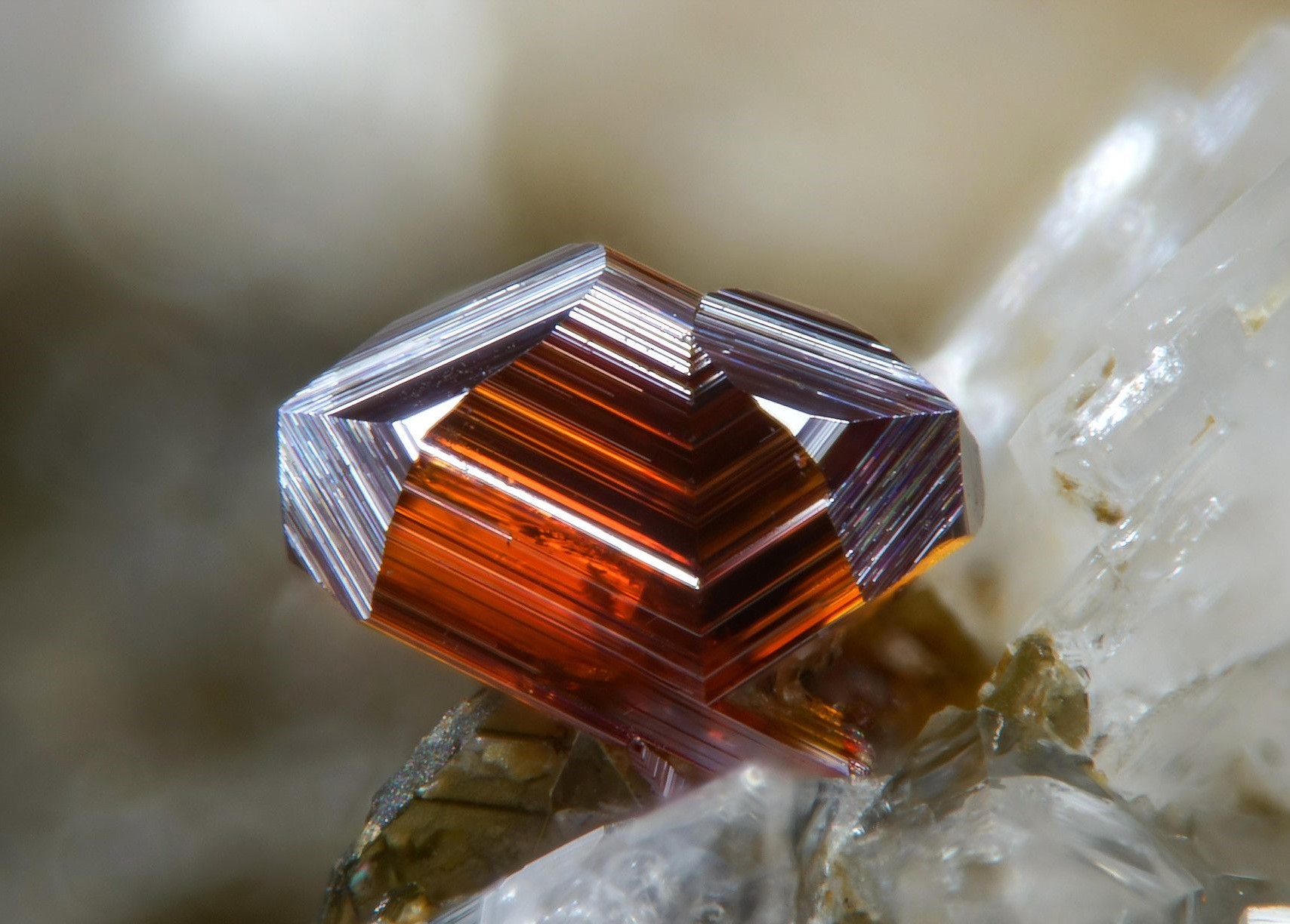
Titanium dioxide (TiO2) is one of the most abundantly used minerals on Earth. It has a wide range of applications across several industries ranging from paints and coatings to sunscreen products. Rutile is the most common and stable naturally occurring physical form of titanium dioxide. Let us delve deep into the properties and uses of rutile in this article.
Physical and Chemical Properties
Rutile crystallizes in the tetragonal crystal system and typically forms euhedral to subhedral prismatic crystals. It has a crisp color that ranges from gray to reddish-brown to black. Rutile is solid and hard with a specific gravity of 4.1–4.3 and a Mohs hardness of 6–6.5.
Chemically, rutile is titanium dioxide (TiO2) which means it contains titanium and oxygen in a 2:1 ratio. Titanium atoms occupy the center of octahedra formed by oxygen atoms. This octahedral crystal structure provides rutile with its durability and stability. Rutile is highly resistant to weathering and corrosion which has made it a widely used mineral.
Occurrence and Production
Rutile commonly occurs as an accessory mineral in metamorphic and igneous rocks such as granite, gneiss, and pegmatites. Major deposits are found in Australia, South Africa, Norway, India, Canada, United States, and Ukraine. The largest rutile mine in the world is located near Nar Bay, Ukraine.
Australia is currently the leading producer and exporter of natural rutile. Rutile concentrates are produced by mining ore deposits, crushing, grinding, gravity separation, electrostatic, and magnetic separation techniques. High purity rutile (above 95%) is recovered for industrial applications.
Applications in Paints and Cosmetics
As a pigment, rutile produces a brilliant white color and is highly opaque and durable. This makes it popular for use as a pigment in paints, plastics, paper, and cosmetics. Over 60% of all mined rutile is used in paints and coatings where it provides hiding power, brightness and tinting strength. In the cosmetic industry, microfine rutile is frequently used as a sunscreen ingredient in creams and lotions due to its ability to reflect, scatter, and absorb UV light effectively. Its inert nature makes it a safe and stable UV-protecting agent.
Usage in Ceramics and Welding
The high refractive index and chemical inertness of rutile also make it valued as a functional filler in ceramics, plastics, and titanium metal production. In the ceramic industry, it is used to produce porcelain enamels, glazes, tiles, and whiteware. During the manufacturing of metallic titanium, rutile concentrates are reduced and converted to titanium sponge or powder. This serves as the raw material for welding rods and other titanium alloy products widely used in aerospace and other industrial applications.
Substitution by Synthetic Rutile
While natural rutile remains an important mineral resource, over half of the titanium dioxide (TiO2) needs are now met by synthetic rutile and titanium slag. This is because natural rutile deposits are limited and its production has not kept pace with growing demand. Synthetic rutile is manufactured by upgrading lower grade ilmenite and titanium slag through artificial processes like the Becher Process and Chloride Process. It has similar applications as natural rutile but is more readily available. However, natural rutile still commands higher prices due to its higher purity levels.
Future Outlook and Sustainability
With the titanium industry projected to grow at over 5% annually in the coming decades, rutile resources will continue to play a strategic role. In line with sustainability goals, efforts are ongoing to promote efficient mining of existing deposits, waste reduction and reuse, cleaner manufacturing technologies, and substituting virgin materials. Research is also evaluating new potential use cases for rutile in areas like lithium-ion batteries, photovoltaic cells, water filtration, and bone implants to support a circular economy approach. Overall, rutile will remain a crucial mineral input for diverse industrial applications well into the future.
Rutile is the predominant naturally occurring crystal form of titanium dioxide with desirable physical, optical and chemical properties. It fills important roles across many consumer and industrial sectors primarily as a pigment and functional filler. While synthetic alternatives supplement natural rutile supply, mining of high-quality deposits will be necessary to meet expanding titanium needs. Sustainable practices will be important to optimize this important mineral resource for the long term.
Get more insights on : Rutile