Light Sensors: An Essential Component in Today's Technology

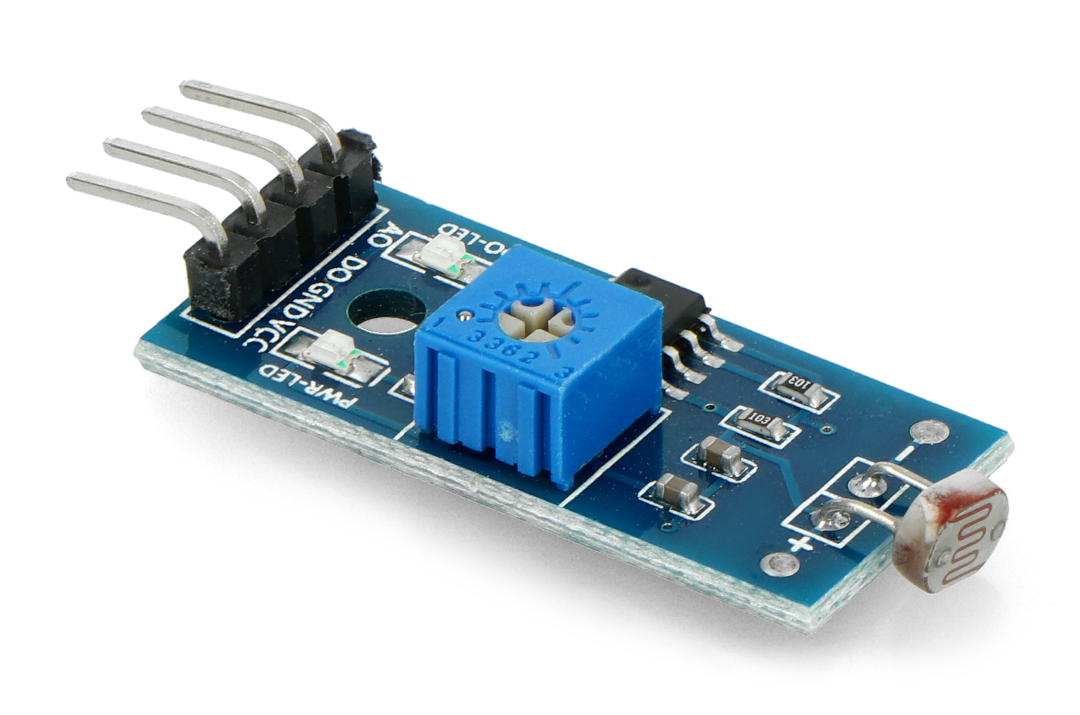
Light sensors play an integral role in various electronic devices and systems that we interact with on a daily basis. From smartphones to security systems to industrial automation, light sensors are quietly working behind the scenes to perform important functions. In this article, we will take a deeper look at light sensors, their working principles, and applications.
What are Light Sensors?
A Light Sensor is an electronic device that can convert light intensity into an electrical signal. At its most basic level, a light sensor contains a photosensitive semiconductor which changes its resistance depending on the amount of light that falls on it. There are different types of light sensors based on the semiconductor material used - the most common ones being photoresistors, photodiodes, and phototransistors.
- Photoresistors are light-dependent resistors whose resistance decreases with increasing incident light intensity. They are generally made from cadmium sulfide or cadmium selenide.
- Photodiodes are similar to general-purpose diodes but are specially made to be sensitive to light. They produce a proportional voltage or current when exposed to light. Silicon is commonly used to make photodiodes.
- Phototransistors are basically transistors that are controlled by light intensity instead of an electrical current. They use light-sensitive semiconductor materials between the base and emitter terminals.
Working of a Light Sensor
All light sensors work on the principle of the photoelectric effect where photons of light eject electrons from the photosensitive semiconductor material. When light falls on the sensor, photons are absorbed by the semiconductor, freeing electrons that are then available to produce an electrical response.
In photoresistors, the free electrons lower the resistance of the material. In photodiodes and phototransistors, the free electrons generate a tiny electric current or voltage at the output terminals. Thus, the quantity or magnitude of the electrical output depends on the intensity of light falling on the sensor.
The Physics Behind Light Sensors
At the atomic level, light sensors take advantage of two fundamental properties of matter - quantization of energy and the photoelectric effect.
- Quantization of Energy: Light or electromagnetic radiation is made up of discrete packets of energy called photons. Different wavelengths of light correspond to photons of different energies as per Planck's quantum hypothesis.
- Photoelectric Effect: First observed by physicist Hertz in 1887 and explained by Einstein in 1905, the photoelectric effect refers to the emission of electrons from matter after the absorption of photons above a certain threshold frequency.
In light sensors, photons of sufficient energy are absorbed by the semiconductor, ejecting bound electrons and making them freely available for conduction. The number of free electrons directly correlates to the intensity of incident light, enabling light sensors to transduce optical signals into electrical signals.
Applications of Light Sensors
Light Sensors in Consumer Electronics
- Ambient Light Sensors: Present in display screens and cameras of smartphones, tablets etc. to auto-adjust brightness based on surrounding light conditions.
- Proximity Sensors: Used to detect when an object such as a face comes close to the device screen during phone calls. Turns off the display to save battery.
- Face Detection Systems: Enables facial recognition security in devices and apps. Photodiodes detect shapes and edges to map unique facial features.
- Optical Mice: Light sensors detect motion and direction by tracking changes in reflected light intensity from the surface below the mouse.
Light Sensors in Automation and Industrial Settings
- Machine Vision Systems: Used along with cameras for inspection, quality control and automation across manufacturing industries.
- Optical Encoders: Detect motion by interrupting or modifying a light source with disks containing irregular patterns. Commonly used in motors, printers etc.
- Touchless Sensing: Proximity sensors in elevators, taps, soap dispensers etc. detect hand motions without contact through light intensity changes.
- Intruder Alarms: Passive infrared sensors that detect changes in infrared light caused by human body heat form the basis of security alarms.
- Traffic Lights: Photocells detect ambient light levels to automatically switch street lights and traffic signals on at dusk and off at dawn.
Future of Light Sensors
Advances in material sciences is leading to new types of light sensors with improved sensitivity, bandwidth and response times. Emerging applications include:
- LiDAR Systems: Using laser light sources, sensors can rapidly scan environments to enable self-driving cars, drones and more.
- Hyperspectral Imaging: Sensor arrays capable of distinguishing over 100 spectral bands for advanced medical, agriculture and industrial analysis.
- Quantum Technologies: Development of single-photon detectors for quantum secure communications, computing and illumination less than 1,000th the intensity of moonlight.
To summarize, light sensors are foundational components underpinning so many technologies we use every day. Advancing materials and novel designs will likely expand their roles into more applications that augment our digital world with intelligent light sensing capabilities.
Get more insights on Light Sensors