Advancing Technologies Drive Innovation in Mine Clearance

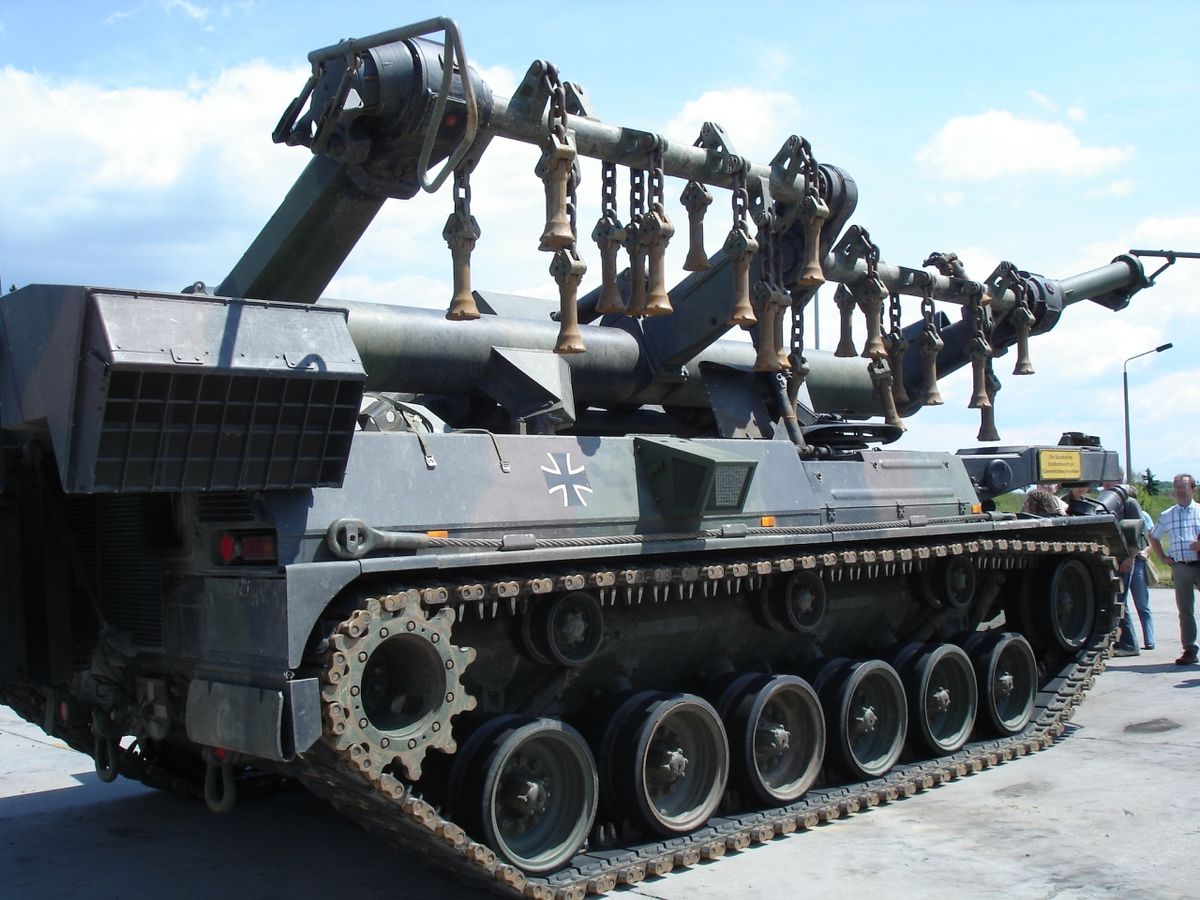
Explosive Remnants of War Pose Grave Threats
Explosive remnants of war (ERW), such as landmines, unexploded ordnance, and improvised explosive devices, continue to endanger populations in areas affected by conflicts. According to the Landmine & Cluster Munition Monitor, there were over 5,500 casualties from ERW in 2019 alone. These devices deprive communities of safe access to land for agriculture, infrastructure, and other development needs long after hostilities have ended. The humanitarian and economic impacts are immense.
New detection technologies aim to speed clearance while enhancing safety. Many mines are buried just below the soil surface or hidden among vegetation, making them difficult to identify with the naked eye. Technical surveys and clearance require meticulous and time-intensive procedures to comprehensively scan areas without accidentally detonating explosives. Advanced sensors and data analysis promise to accelerate this work.
Ground-Penetrating Radar Gains Widespread Use
Ground-penetrating radar (GPR) has become a mainstay technology for landmine detection. GPR systems emit pulsed electromagnetic waves that transmit into the ground and reflect off any buried objects or anomalies, creating an underground image. The reflections are captured and processed to identify potential items of interest for further investigation. Developments in antenna design, imaging algorithms, and data integration have greatly enhanced GPR's detection capabilities in recent years.
GPR arrays with multiple transmit-receive elements allow for real-time 3D imaging. Mine Clearance System This provides improved visualization of complex environments with natural clutter. Simultaneous sensing over a swath of terrain speeds mapping without sacrificing detail. Automated feature extraction with machine learning expedites review of voluminous GPR datasets. Combining GPR with magnetometry or other methods in multi-sensor platforms has achieved breakthrough cross-cueing for harder-to-detect targets. These advancements have accelerated surveys by an order of magnitude or more in some cases.
Unmanned Systems Take Over Dangerous Tasks
In addition to driving faster clearance, new remote and autonomous systems aim to reduce risk to human life. Explosive ordnance disposal (EOD) robots have long been used to handle suspected explosives from a safe standoff distance. Latest generations provide high-fidelity teleoperation and maneuverability for intricate tasks. Small multi-rotor drones equipped with optical and infrared cameras now enable reconnaissance of suspect areas prior to entry.
Larger unmanned ground vehicles (UGVs) are gaining EOD and sample collection roles as well. Some models incorporate GPR and other sensors to perform technical survey functions without endangering humans. Once areas are scanned and targets located, these UGVs can accurately place and detonate explosive charges. Ongoing research incorporates advanced maneuvers, more durable designs, and expanded payloads to handle heavier EOD work traditionally done by people. The vision is for full minefield processing by mixed teams of autonomous and semi-autonomous robots.
Artificial Intelligence Boosts Detection Accuracy
Artificial intelligence (AI) and machine learning bring powerful new analysis capabilities to mine action. Deep neural networks trained on vast datasets of sensor signatures and field images can rapidly discern explosives from benign items. This enables automated detection within the flood of real-time sensor data. AI also assists operational planning by assessing terrain, vegetation coverage, and other geophysical factors that influence targeting probabilities in a given area.
Pattern recognition tools catch subtle visual cues too subtle for human reviewers. AI-driven image processing extracts features from photograph archives to automatically geo-locate sites and map mined areas for more efficient clearance scheduling. Self-supervised learning allows algorithms to progressively improve through unlabelled data from the field. Multi-source data fusion techniques combining AI detectors with other sensors promise breakthroughs in challenging landscapes. These computational techniques promise to dramatically boost clearance efficiency and quality control.
Looking Ahead with Cautious Optimism
Technological progress holds great promise to fundamentally change the face of mine action. However, fully autonomous systems for EOD work remain years away due to technical challenges around perception, manipulation, and assured safety. Mixed teams of robots and human operators combining strengths will likely dominate in the nearer term as core technologies continue advancing. Integration of diverse sensors, AI exploitation of big datasets, and novel platform designs all offer hope of accelerated clearance schedules while minimizing risk.
Get more insights on Mine Clearance System
Also read related on Phishing Simulator Market