Advancing Diagnostic Precision Through Automation

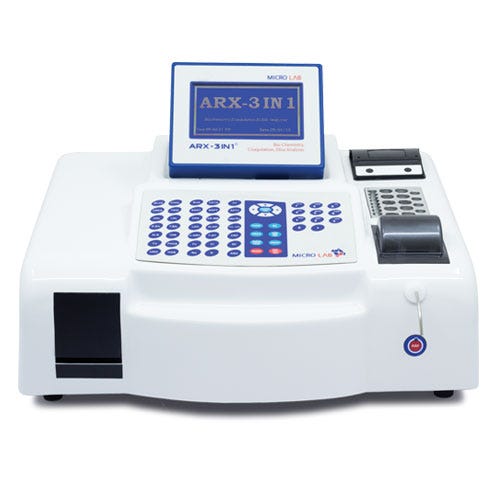
The Elisa Analyzer represents a groundbreaking advancement in clinical and research diagnostics, fundamentally enhancing the sensitivity, accuracy, and efficiency of enzyme-linked immunosorbent assays (ELISAs). ELISA, a widely used immunoassay technique, enables the quantitative detection of antigens, antibodies, proteins, and hormones within biological samples. The Elisa Analyzer automates this complex biochemical procedure, reducing manual intervention and improving reproducibility for diverse applications spanning disease diagnostics, vaccine development, and biomarker discovery.
Today’s Elisa Analyzer systems integrate sophisticated optics, user-friendly software, and high-throughput capabilities. These analyzers enable laboratories to conduct multiple assays simultaneously, delivering rapid and precise results that are crucial for timely clinical decisions and extensive research projects. The ability to analyze dozens or even hundreds of samples in a single run addresses the growing demand for efficiency in diagnostic workflows. Additionally, Elisa Analyzers accommodate various assay formats, including direct, indirect, sandwich, and competitive ELISA protocols, making them versatile tools in immunological studies.
How Elisa Analyzer Enhances Precision in Diagnostic Testing
The precision offered by Elisa Analyzer comes from their ability to minimize human error and variability inherent in manual ELISA procedures. These analyzers utilize calibrated microplate readers to measure absorbance, fluorescence, or chemiluminescence signals generated during antigen-antibody reactions. The software algorithms further refine data interpretation by implementing background correction, standard curve generation, and result normalization.
Such exactness in measurement ensures higher assay sensitivity, which is pivotal for detecting low-abundance biomarkers in early disease stages or monitoring subtle changes in patient conditions. Automated washing systems incorporated into Elisa Analyzers optimize reagent removal between assay steps, preserving sample integrity while enhancing signal-to-noise ratios. This combination of precise optical detection and controlled fluid handling contributes to reproducible results that meet stringent clinical laboratory standards.
Key Applications of Elisa Analyzer in Clinical and Pharmaceutical Industries
Elisa Analyzers serve critical roles across multiple sectors, including clinical diagnostics, biotechnology, and pharmaceutical research. In healthcare settings, these analyzers support the diagnosis and monitoring of infectious diseases such as HIV, hepatitis, and COVID-19 by quantifying pathogen-specific antibodies or antigens. Their rapid turnaround time expedites patient management by enabling timely initiation of therapy.
In the pharmaceutical industry, Elisa Analyzers facilitate pharmacokinetic and pharmacodynamic studies by measuring drug concentrations and immune responses during clinical trials. Additionally, vaccine efficacy evaluation heavily relies on ELISA assays monitored via advanced analyzers, enabling the quantification of antibody titers post-immunization. Moreover, the food safety sector utilizes Elisa Analyzers to detect allergens, toxins, and contaminants, ensuring regulatory compliance and consumer protection.
Navigating Market Reports on Elisa Analyzer Demand and Growth Trends
The escalating demand for Elisa Analyzer technology is driven by increasing healthcare expenditures, rising prevalence of chronic diseases, and advancements in personalized medicine. Market reports analyzing Elisa Analyzer growth reflect significant expansion across regions such as North America, Europe, and Asia-Pacific. These analyses provide comprehensive insight into technology adoption rates, segmental performance, and competitive landscapes.
For organizations and researchers interested in in-depth data regarding market dynamics, technology evolution, and key industry players in the Elisa Analyzer segment, detailed reports are available that systematically evaluate trends, challenges, and opportunities within this domain. Such intelligence supports stakeholders’ strategic decisions, product development, and investment planning in the life sciences sector.
Commercial Advantages of Implementing Elisa Analyzer Systems in Laboratories
The integration of Elisa Analyzers into laboratory workflows offers substantial commercial benefits by reducing labor costs, shortening assay turnaround times, and increasing testing throughput. Automation minimizes manual pipetting and repetitive tasks, allowing skilled personnel to focus on data analysis and interpretation rather than sample preparation. This efficiency gains translate to faster report generation and enhanced patient care.
Moreover, Elisa Analyzers ensure consistent assay performance across multiple batches and operators, maintaining high-quality standards essential for accreditation and compliance. The scalability of these analyzers enables laboratories to expand testing volumes without compromising accuracy or incurring significant incremental costs. Consequently, Elisa Analyzer adoption supports both small-scale clinical labs and large reference laboratories in achieving operational excellence and competitive differentiation.
Transactional Insights for Purchasing Advanced Elisa Analyzer Equipment
When considering procurement of Elisa Analyzer equipment, it is important to evaluate system specifications such as detection modes (absorbance, fluorescence, chemiluminescence), throughput capacity, software capabilities, and maintenance requirements. Vendors frequently offer modular options allowing customization aligned with specific assay needs and laboratory sizes.
Financing options, warranty agreements, and after-sale technical support are transactional factors impacting purchasing decisions. Leading manufacturers provide comprehensive customer support including installation, training, and troubleshooting services to ensure optimal instrument performance over its lifespan. Potential buyers should also assess compatibility with existing laboratory infrastructure and assay kits to streamline integration.
In addition to direct acquisition, some laboratories explore leasing models or reagent rental agreements to optimize capital expenditure while accessing updated technologies. These transactional approaches enable flexibility in adopting Elisa Analyzer solutions tailored to evolving organizational demands.
Get this Report in Japanese Language: エリサ分析装置市場
Get this Report in Korean Language: 엘리사 분석기 시장
About Author:
Money Singh is a seasoned content writer with over four years of experience in the market research sector. Her expertise spans various industries, including food and beverages, biotechnology, chemical and materials, defense and aerospace, consumer goods, etc. (https://www.linkedin.com/in/money-singh-590844163)