Colposcope: An Important Medical Device for Women's Health

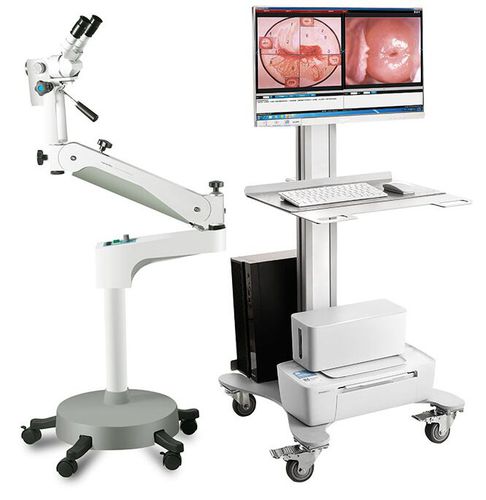
What is a Colposcope?
A colposcope is an instrument that helps in examining the cervix (opening of the uterus from the vagina) and the tissues around it. The colposcope provides magnification of the cervix and vagina up to ten times. It is equipped with a high-intensity light source, usually halogen lamps, which illuminates the vaginal walls and cervix clearly. The light source also enables the examination of the tissues' features in finer details with the help of magnification. A colposcope provides illumination, magnification, and stereoscopic vision to aid visual examination of the cervix.
Diagnosing Cervical Abnormalities
One of the main uses of colposcopy is to diagnose abnormalities of the cervix. The examination helps detect abnormalities like precancerous lesions, cancerous lesions, or inflammation of the cervix. It allows the gynecologist to closely view any area of the cervix with abnormal appearances. Common cervical abnormalities examined include cervical intraepithelial neoplasia (CIN), human papillomavirus (HPV), and warts. The colposcopic examination involves examining the transformation zone, squamocolumnar junction, and vascular patterns to diagnose cervical lesions accurately.
Directed Biopsy for Diagnosis
Colposcopy plays an important role in guiding biopsies of any suspicious lesions seen on the cervix or vagina. During a Colposcope exam, a gynecologist can perform a directed biopsy of visible lesions on the cervix under magnification. This enables the collection of tissue samples from the exact area of the abnormality. The samples are then sent for histopathological examination under the microscope to confirm the diagnosis. Directed biopsies guided by colposcopy are more accurate than blind biopsies as they remove samples from identified sites of abnormality.
Treating Precancerous Lesions
Colposcopy also helps in treating precancerous cervical lesions. Based on the suspected severity and size of the abnormal precancerous area, different treatment options may be used. The commonly performed colposcopy-guided treatments include:
- Loop Electrosurgical Excision Procedure (LEEP): Use of electrical current passed through a wire loop electrode to remove the entire area of abnormality.
- Laser Surgery: Use of laser energy to vaporize the abnormal cervical tissues.
- Cold Knife Cone Biopsy: Surgical excision of a cone-shaped piece of tissue from the cervix containing the entire abnormal area.
The goal of these treatments is to completely remove the precancerous lesion to prevent cervical cancer development. A post-treatment colposcopic exam confirms clearance of the abnormal area.
Follow-up after Abnormal Pap Test
Colposcopy plays an important role in management after abnormal Pap test results indicating possible cervical cell changes. If a Pap test shows atypical squamous cells of undetermined significance (ASC-US) or low-grade squamous intraepithelial lesions (LSIL), further evaluation with colposcopy is recommended. Colposcopy helps the doctor assess if biopsy is needed to determine if a precancerous condition exists. It guides timely treatment if required to prevent progression to cervical cancer.
Post-treatment Examinations
For women who have undergone treatment for precancerous cervical lesions or cervical cancer, periodic post-treatment colposcopy forms an important part of follow-up care. Repeat colposcopy exams provide visualization of the transformation zone and cervix, detecting any recurrence, residual, or new abnormalities early. This allows prompt diagnosis and retreatment if needed. Regular post-treatment screening using colposcopy improves survival rates from cervical cancer.
Widespread Use in Clinical Practice
Today, colposcopy has become an integral part of gynecological practices worldwide for evaluating the cervix and vagina. It provides an affordable and effective method for early detection and treatment of precancerous lesions. The availability of portable, battery-operated colposcopes has enabled its use even in resource-poor settings. Research into improving imaging capabilities and digital documentation of colposcopic findings is further enhancing its clinical value. Overall, colposcopy plays a pivotal role in improving outcomes of cervical cancer prevention programs globally.
get More Insights on Colposcope