Advances in Bioinformatics: Leveraging Data and Algorithms for Biomedical Insights

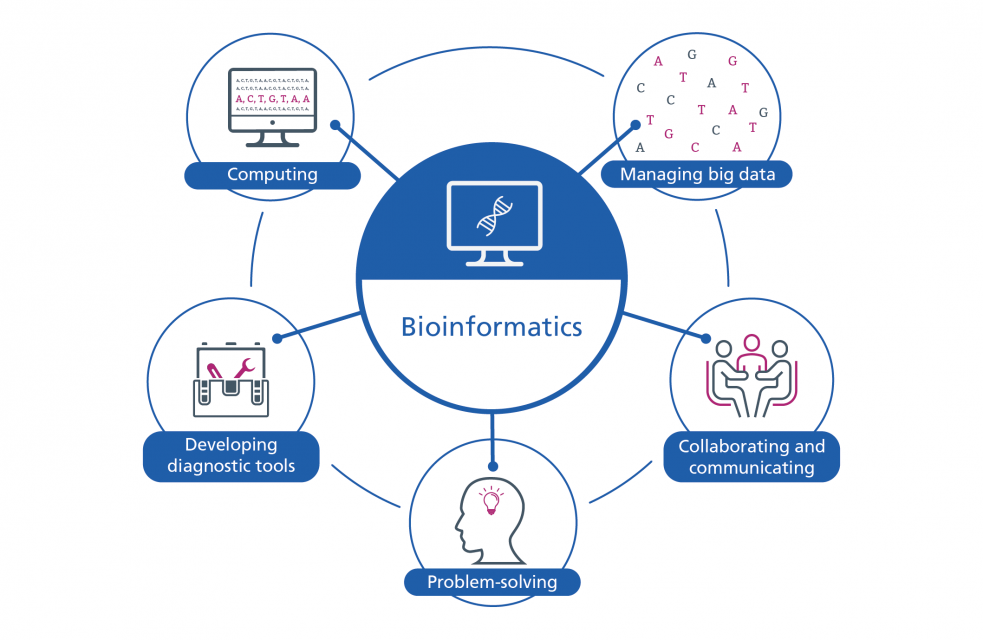
Bioinformatics is an interdisciplinary field that combines biology, computer science, and mathematics to analyze and interpret biological data. Over the past few decades, significant strides have been made in this field, leading to a revolution in biomedical research and healthcare. This article explores some of the key advances in bioinformatics and how they have enabled scientists to gain valuable insights into complex biological processes.
One of the primary drivers of progress in bioinformatics is the ever-increasing volume of biological data generated through high-throughput technologies such as genomics, transcriptomics, proteomics, and metabolomics. The Human Genome Project, completed in 2003, was a monumental milestone in this regard, providing the complete sequence of the human genome. Since then, similar projects for various organisms have followed, leading to an explosion of genomic data. However, the challenge lies in making sense of this vast amount of information.
This is where sophisticated algorithms and computational methods have played a crucial role. Bioinformaticians have developed powerful tools to analyze DNA sequences, identify genes, predict protein structures, and compare genetic variations across populations. For instance, sequence alignment algorithms enable the comparison of DNA or protein sequences to identify similarities and differences, revealing evolutionary relationships and functional annotations.
Furthermore, the integration of bioinformatics with systems biology has led to a deeper understanding of biological networks and interactions. Network analysis techniques allow researchers to explore complex relationships within biological systems, such as gene regulatory networks and protein-protein interactions. This has significant implications for studying diseases, as disruptions in these networks can provide valuable insights into the underlying molecular mechanisms.
Another notable advancement is the application of machine learning and artificial intelligence in bioinformatics. These algorithms can learn from vast amounts of data and make predictions or classifications based on patterns and trends. In the context of bioinformatics, machine learning models have been developed to predict protein structures, identify disease biomarkers, and classify cancer subtypes, among many other applications. As the field continues to grow, machine learning approaches will become increasingly essential for extracting meaningful information from biological data.
Bioinformatics has also played a critical role in personalized medicine. By analyzing an individual's genetic makeup, bioinformaticians can identify genetic variants associated with disease risk and drug response. This information can then be used to tailor treatments to each patient's specific needs, maximizing efficacy and minimizing adverse effects. Personalized medicine has the potential to revolutionize healthcare by shifting the focus from a one-size-fits-all approach to precision medicine.
Additionally, bioinformatics has facilitated the exploration of metagenomics, the study of microbial communities present in various environments, including the human body. Metagenomics has opened up new avenues of research, helping us understand the role of the microbiome in health and disease. By analyzing the genetic content of these microbial communities, scientists can identify potential probiotics, biomarkers for disease, and even novel antibiotics.
In conclusion, the field of bioinformatics has witnessed remarkable advances in recent years, enabling scientists to unravel the complexities of biological systems and gain valuable biomedical insights. The integration of massive biological datasets with powerful algorithms and computational methods has paved the way for breakthroughs in personalized medicine, disease research, and our understanding of the microbiome. As technology continues to advance, bioinformatics will undoubtedly remain a key driving force in pushing the boundaries of biomedical research and healthcare.