Advances in Bone Densitometers: Precision Osteoporosis Assessment and Beyond

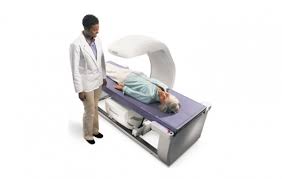
Osteoporosis, a condition characterized by low bone mass and structural deterioration of bone tissue, affects millions of people worldwide, particularly the elderly and postmenopausal women. It poses a significant public health concern due to its association with an increased risk of fractures, leading to reduced quality of life and substantial healthcare costs. Bone densitometry, a non-invasive diagnostic technique, has played a pivotal role in the early detection and management of osteoporosis. Recent advances in bone densitometers have revolutionized the field, offering precision assessment and extending their utility beyond traditional bone density measurement.
One of the primary advancements in bone densitometers is the introduction of dual-energy X-ray absorptiometry (DXA). DXA has become the gold standard for measuring bone mineral density (BMD) and assessing fracture risk. The technology utilizes low-dose X-rays to measure BMD at various skeletal sites, typically the hip and spine, which are the most vulnerable areas to fractures. DXA provides accurate and reproducible results, aiding clinicians in diagnosing osteoporosis, monitoring treatment efficacy, and making informed decisions about patient care.
Continuing progress in DXA technology has led to enhanced precision and increased sensitivity in measuring BMD. Manufacturers have developed innovative algorithms and software, refining image processing techniques to reduce errors and improve measurement reliability. These improvements ensure early detection of bone loss and enable timely intervention, which is crucial in preventing fractures and associated complications.
Furthermore, modern bone densitometers offer the capability to assess bone quality beyond traditional BMD measurements. They incorporate additional parameters like trabecular bone score (TBS) and finite element analysis (FEA). TBS assesses the microarchitecture of trabecular bone and provides valuable information about bone strength, independent of BMD. FEA, on the other hand, simulates mechanical loading on bone structures, enabling clinicians to evaluate the overall bone strength and predict fracture risk more accurately.
The integration of artificial intelligence (AI) and machine learning has been another groundbreaking advancement in bone densitometry. AI algorithms can analyze vast amounts of data from different patient populations, contributing to the development of predictive models for fracture risk assessment. By combining patient-specific information such as age, sex, medical history, and DXA measurements with AI-based algorithms, clinicians can now make personalized and data-driven decisions for their patients, optimizing treatment plans for osteoporosis management.
Moreover, portable and point-of-care bone densitometers have emerged as a notable advancement in the field. These compact and lightweight devices allow for on-the-spot assessments, making bone health evaluations more accessible in remote or underserved areas. Portable bone densitometers are particularly useful in screening campaigns and outreach programs, facilitating early detection of osteoporosis and promoting preventive measures to reduce fracture incidence.
Beyond osteoporosis assessment, bone densitometers are finding applications in other medical fields. Research is ongoing to explore their utility in assessing bone health in athletes and astronauts, as well as monitoring the effects of chronic diseases and medications on bone density. Additionally, bone densitometry is becoming a valuable tool in assessing pediatric bone health and identifying early signs of bone disorders in children.
In conclusion, the advances in bone densitometers have transformed the way we assess and manage osteoporosis. DXA technology has evolved to provide precise measurements and improved sensitivity, enabling early detection and personalized treatment plans. The incorporation of additional parameters like TBS and FEA, along with AI-based algorithms, has enhanced fracture risk prediction. Moreover, portable and point-of-care devices have expanded accessibility to bone health evaluations. The continuous research and development in this field hold the promise of even more innovative applications beyond osteoporosis assessment, making bone densitometers invaluable tools in promoting skeletal health across different populations.