X-Ray Imaging Market Size and Share Analysis with Growth and Trends
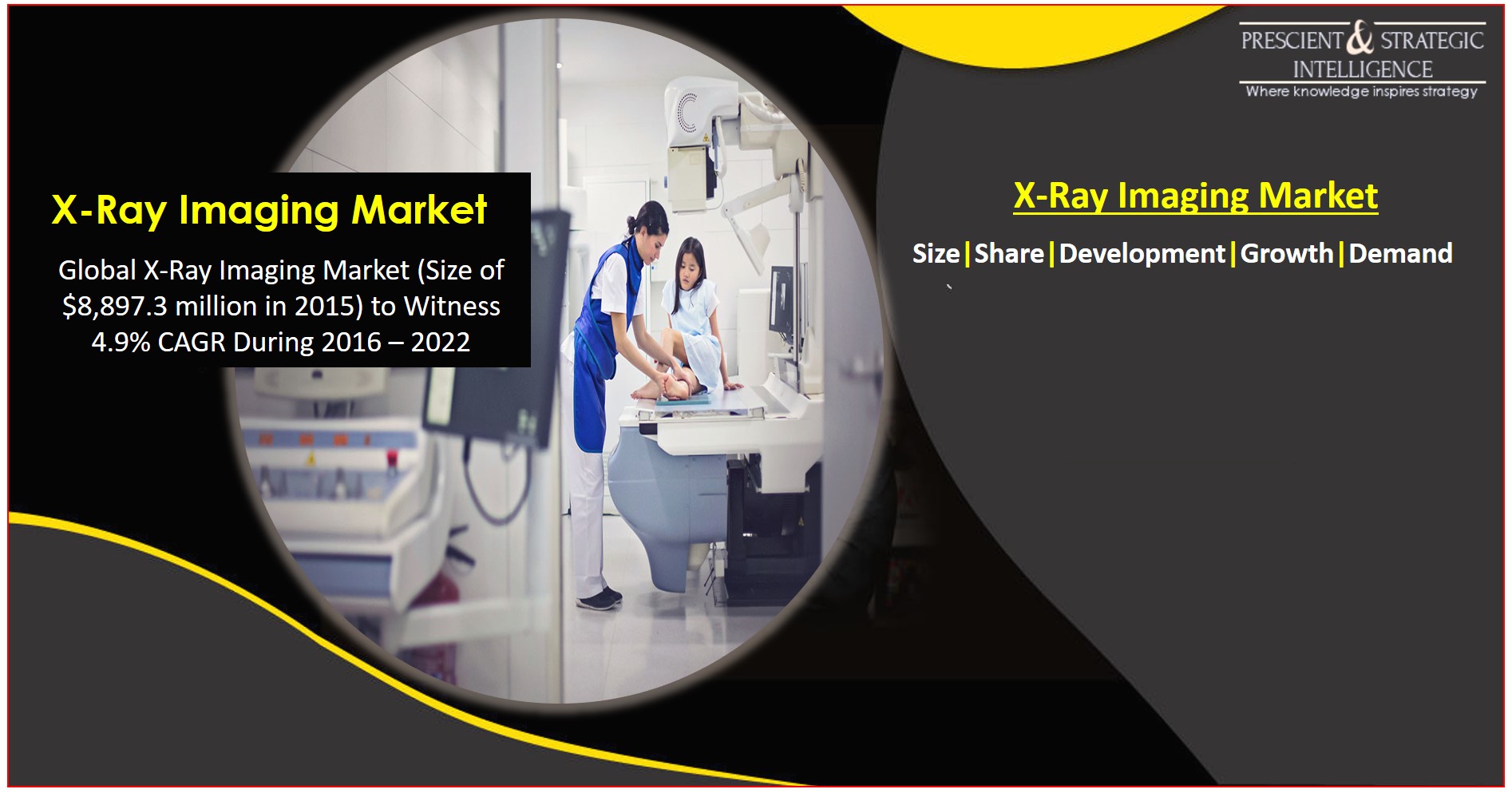
The governments across the world are focusing on educating people regarding chronic diseases, especially breast and lung cancer, and other prevalent diseases, such as tuberculosis. This, in turn, is projected to create awareness among people and the healthcare providers regarding early diagnosis of diseases. Due to technological advancements, a number of advanced diagnostic systems are available at the present time, which are capable of aiding the healthcare providers to diagnose different diseases, such as pulmonary tuberculosis, lung cancer, rheumatoid arthritis, pneumonia, and osteomyelitis. Diagnostic imaging enhances healthcare quality and decreases healthcare cost by avoiding unnecessary invasive procedures.
There are several applications of X-ray imaging systems such as chest, mammography, orthopedic, and dental. Out of these, the largest demand for X-ray imaging systems was created for the orthopedic application during 2012–2015. Orthopedic X-rays are utilized for routine investigation to diagnose and monitor skeletal conditions. It is used for identifying structural abnormalities, fracture, osteomyelitis, and degenerative joint conditions, and to follow up on joint replacement. The fastest growth in demand is projected to be witnessed by the chest application in the coming years. A chest X-ray is performed for evaluating chest, heart and lung walls for the diagnosis of several conditions including fever, chest pain, shortness of breath, and persistent cough.
Download Sample Copy of This Research Report: https://www.psmarketresearch.com/market-analysis/x-ray-imaging-market/report-sample
Due to the growing requirement of X-ray imaging systems, the manufacturers are increasingly focusing on improving the technology of these systems. Technological advancements have resulted in product innovations, such as mobile and digital X-ray systems. Whereas before X-ray images were recorded, stored, and interpreted on X-ray films, now diagnostic images can be stored and interpreted in digital signals. Other advancements in the field include affordable digital X-ray imaging systems, large area detection, energy resolution, and low dose imaging. These factors are predicted to drive the demand for X-ray imaging systems.