Osmium: A Rare and Dense Transition Metal

Discovery
Osmium was discovered in 1803 by Smithson Tennant, an English chemist. He extracted the element from an impure sample of platinum. Osmium's name comes from Greek word osme which means "smell" because some of its compounds have strong smells. For a long time, it was difficult to extract pure osmium metal due to its very high melting point. It was one of the last stable elements to be discovered on the periodic table.
Physical Properties
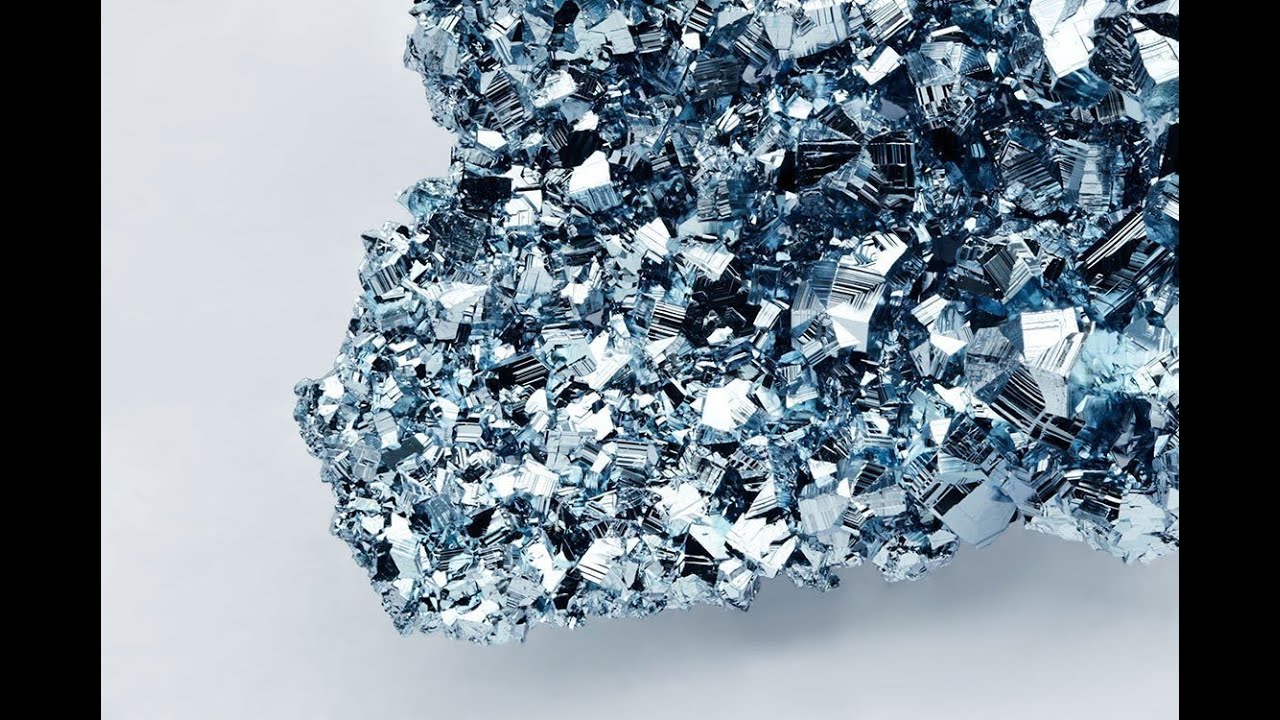
Osmium is a hard, brittle, blue-gray metal that looks similar to platinum. It has a density of 22.59 g/cm3, making it the densest stable element and one of the densest substances known. This extreme density is due to its low number of empty space in its crystalline structure due to small atomic radius. Osmium has a melting point of 3,306°C (5,523°F) and a boiling point of 5,012°C (9,054°F), which are the highest among all naturally occurring elements. Its high melting point makes it resistance to heat suitable for circuits operating at high temperatures.
Osmium is part of platinum group metals and shares many similarities with other platinum metals like ruthenium, rhodium, palladium, platinum and iridium due to the filled electron shells in their atomic structures. However, osmium is chemically the most reactive member of the platinum group metals. It reacts directly with halogens at room temperature and forms many intermetallic compounds.
Applications
Despite its high cost and rarity as a byproduct of nickel mining, osmium finds few applications due to its corrosion resistance and hardness. Due to its high melting point, osmium is used as tip of fountain pen nib to make them heat and corrosion resistant. Its hardness also allows it to be used for making instruments and mechanical devices.
Early electric arc lamps contained osmium filaments because of the metal's high melting point. However, it was replaced by tungsten which was more available and cheaper. Osmium tetroxide is used as a catalyst and reagent in organic synthesis. Trace amounts of osmium are added to harden and strengthen platinum alloys used in certain jewelry and electrical contacts.
Osmium is sometimes used in tips of styli used to read vinyl records due to its hardness. Its high density makes osmium suitable for balancing high precision instruments like gyroscopes. Osmium oxide (OsO2) was formerly used as a reducing agent in analytical chemistry. Osmium has potential use in ultra-capacitors and fuel cells due to its surface area being variable.
Osmium Compounds
Osmium forms several oxides like osmium tetroxide (OsO4), osmium dioxide (OsO2) and trioxides (OsO3). Among them, osmium tetroxide is the most stable and commercially important osmium compound. It is a very volatile, pale-yellow crystalline solid with a strong smell. Due to its volatility at room temperature, it sublimates readily into yellow fumes which are powerful oxidizing agents.
Osmium tetroxide is highly toxic and exposure may cause skin burns, lung damage or even death in large accidental inhalation. It is commonly used as a staining agent in biology to enhance contrast in transmission electron microscopy. Other uses involve its powerful oxidizing properties in organic synthesis as a catalyst and for making other osmium compounds. Osmium often forms coordination complexes with ligands in different oxidation states.
Osmium in Nature
Although osmium is rarer than gold, it occurs naturally in the Earth's crust at average concentration of around 1 part per billion. Small amounts of the metal are found in platinum-bearing ore deposits, usually alongside other platinum group metals. The largest sources are located in South Africa and Russia. However, osmium is primarily produced as a byproduct of processing of nickel ores for more abundant platinum group metals.
Annual world production is about 3 tonnes with South Africa, Russia and Canada being the leading producers. Osmium has a reserve of 1,000 tonnes. It remains one of the rarest and scarcest metals on earth. Osmium is not found in metallic form in nature due to its high chemical reactivity. However, small amounts of osmium oxide are found in rare minerals like iridosmine and osmiridium. Osminium is an alloy of osmium and iridium found in nature.
Get this Report in Japanese Language- オスミウム
Get this Report in Korean Langauge- 오스뮴
About Author-
Ravina Pandya, Content Writer, has a strong foothold in the market research industry. She specializes in writing well-researched articles from different industries, including food and beverages, information and technology, healthcare, chemical and materials, etc. With an MBA in E-commerce, she has an expertise in SEO-optimized content that resonates with industry professionals. (https://www.linkedin.com/in/ravina-pandya-1a3984191)