Evolving Arena of Microscale 3D Printing

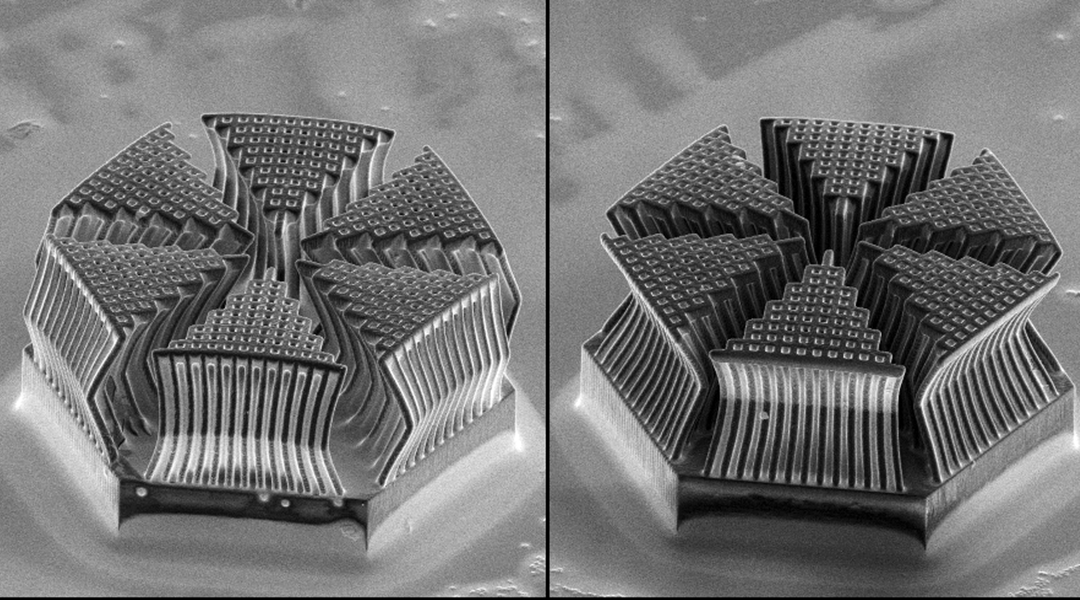
3D printing has revolutionized manufacturing by allowing almost anything to be printed in three dimensions. However, conventional 3D printers have size limitations and cannot fabricate extremely small components at the microscopic scale. This is where microscale 3D printing comes into play, opening up new frontiers in miniature manufacturing.
What is Microscale 3D Printing?
Microscale 3D printing, also known as microscale additive manufacturing, refers to 3D printing processes capable of fabricating structures that are measured in microns rather than millimeters. Typically, microscale 3D printing deals with resolutions less than 1,000 microns (1 mm) and feature sizes below 100 microns. At this scale, it allows building miniature components and highly complex geometries that were previously impossible to manufacture.
The main microscale 3D printing technologies currently being researched and developed are:
- Two-photon polymerization: Uses ultra-short laser pulses to polymerize photocurable resin point-by-point, layer-by-layer to build structures. Capable of sub-100 nanometer resolution.
- Direct ink writing: Deposits gel, polymer or hydrogel-based inks through microfluidic printheads to construct 3D objects. Typical resolution ranges from 100 microns to 1 micron.
- Laser lithography: Focuses a laser onto a photoresist-coated substrate to selectively cure patterns based on computer-aided design files. Allows feature sizes of around 1 micron.
- Focused electron beam induced deposition: Uses an electron beam to dissociate a gas and deposit the vapor onto a surface in the desired pattern. Can achieve nanoscale features below 10 nanometers.
Expanding Manufacturing Horizons at the Microscale
Microscale 3D Printing is bringing revolutionary possibilities across various application domains by enabling the fabrication of intricate microstructures. Some key areas where it is making an impact include:
Biomedical Applications - Microscale 3D printing allows constructing tissue scaffolds, medical implants, pills, and surgical guides at unprecedented precision. It is being used to print living cells, drugs, and biological structures for developing organ-on-a-chip technologies.
Microelectronics - The ability to 3D print at micro and nanoscales opens up new vistas in printed electronics, flexible circuits, sensors, and lab-on-a-chip devices. Complex conductive traces, transistor architectures, and even entire integrated circuits can now be additively manufactured.
Microfluidics - The emergence of printing methods for hydrogels and aqueous solutions has facilitated construction of micron-scale fluidic networks, pumps, mixers and biochemical analysis chips with intricate multi-layer channel designs.
Photonics - Microscale 3D printing allows direct fabrication of photonic crystals, waveguides, optical lenses, fiber optics and other photonic components with nanoscale control over material composition and structure.
Micro Optomechanics - Printing micro gears, motors, actuators, mirrors and other movable microscale structures has potential applications in areas like micro robotics, adaptive optics and lab-on-a-chip automation.
Surpassing Conventional Limits
What makes microscale 3D printing so transformative compared to macroscale additive processes is its unmatched geometrical precision and ability to manufacture previously inaccessible miniaturized forms. Some key advantages include:
- Nanoscale feature sizes - Structures can be fabricated with nanoscale gradients, porosity and intricate interior channel networks impossible with any other method.
- Multimaterial printing - Complex composites, living tissues and materials with mechanical, optical and chemical gradients can be 3D printed by depositing multiple reagents micron-by-micron.
- Smooth surfaces - Repetitive laser scanning or electron beam writing results in atomically smooth surfaces down to angstrom roughness unmatched by any other microfabrication process.
- Self-supported overhangs - Complex 3D geometries with suspended or bridging structures are easily printable without need for support materials later.
- Direct digital manufacturing - Designs can be directly manufactured from CAD files without any lithographic masks or molds, reducing design-to-product cycles.
- Miniaturization - The ability to 3D print millimeter and smaller devices opens up entirely new spectra of miniaturized electromechanical systems, tissue scaffolds and optical elements.
Overcoming Challenges
While microscale 3D printing shows phenomenal promise, there remain technological hurdles to address before the field can mature:
- Slow fabrication speeds - High-resolution processes like two-photon polymerization are slow, taking hours to days to print microscale structures. Faster multi-beam approaches need development.
- Limited material selection - Most methods currently support only light-curable resins, requiring expansion to cell-compatible, bio-degradable and electronics-compatible materials.
- Precision requirements - Achieving repeatable nanoscale placement of deposited material voxels and minimal physical distortion over multi-hour builds requires extensive engineering efforts.
- Surface adhesion issues - Printing softer photopolymers, hydrogels or metallics within complex hollow structures prone to collapse needs solutions.
- High costs - Micro 3D printers remain expensive research tools, requiring economies of scale for widespread industrial and commercial use.
However, with continued research and innovations to solve the above issues, microscale 3D printing promises to revolutionize fields as diverse as biomedicine, microelectronics and nanofabrication by delivering truly transformative manufacturing capabilities at the tinierest of scales. The onset of this technology will open up design freedoms never thought possible before and usher in new industrial paradigms for making micron-scale systems.
Get More Insights on this Topic- https://www.newswirestats.com/the-emerging-revolution-of-microscale-3d-printing/
Explore More Trending Articles- https://masstamilan.tv/business-spend-management-software-enabling-organizations-to-gain-operational-efficiencies/