Aortic Valve Market Regional Revenue, Trends, Opportunities and Future Prospects
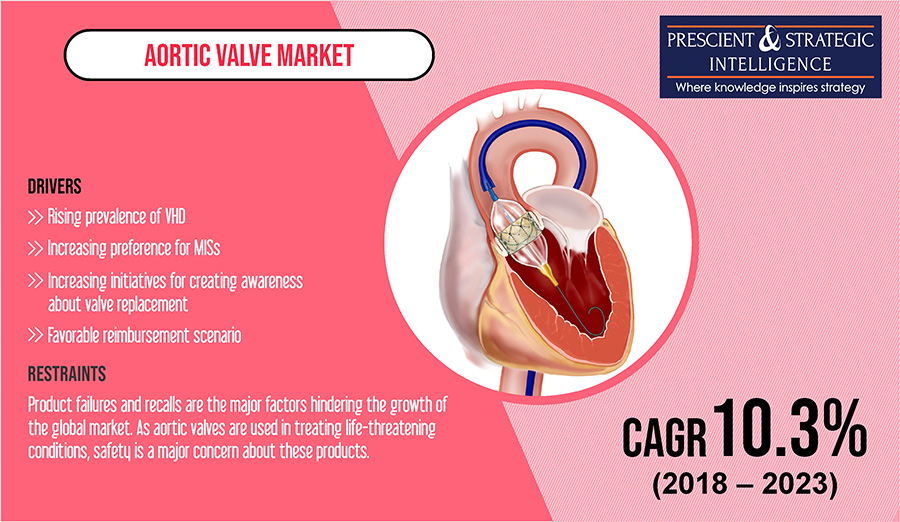
The increasing number of valvular heart disease (VHD) cases, growing efforts to generate awareness about the same among the populace, and favorable medical reimbursement policies are driving the aortic valve market across the globe. It is being expected that during the forecast period (2018–2023), the market will progress with a CAGR of 10.3%. At this rate, the revenue generated from the sale of such devices would grow from $5.6 billion in 2017 to almost $9.9 billion 0in 2023.
Therefore, as the geriatric population increases across the world, so will the prevalence of VHD, which will continue driving the aortic valve market during the forecast period. Government initiatives being taken to raise the awareness of VHD are also playing an important role in the market growth. For instance, the Alliance for Aging Research, in 2017, designated February 22 as the National Heart Valve Disease Awareness Day in the U.S. The aim behind this was to make people aware of the risk factors and symptoms of the disease for faster detection and treatment.
Request to Get the Sample Pages at:
https://www.psmarketresearch.com/market-analysis/aortic-valve-market/report-sample
Now, among the two types of valves transplanted in the human body — mechanical and tissue/biological — the latter dominated the market during the historical period (2013–2017) in terms of sales volume as well as value. In terms of value, tissue/biological valves held almost 65.0% share in the aortic valve market. Such valves, which are made from tissues of other animals, are quite flexible and can last up to 20 years. Further, people transplanted with biological/tissue valves do not require additional medication.
Therefore, it is clear that the increase in the prevalence of VHD, driven by the growth of the geriatric population, will bode well for the market for aortic valves.