HOW FORM LINERS ARE PRODUCED
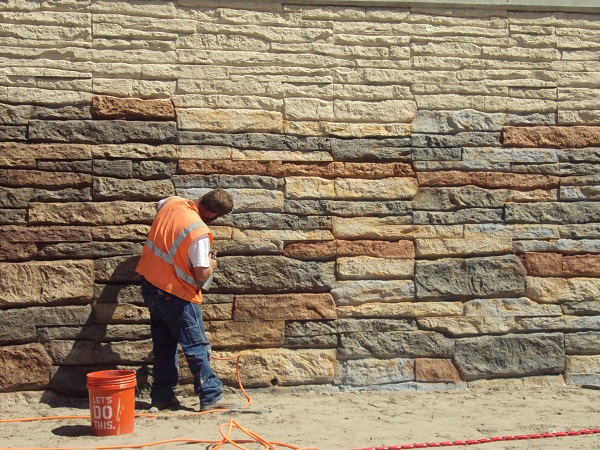
Form liners have become the modern day aesthetic material for designing concrete walls and creating a beautiful surrounding. The use of form liners does not only create a beautiful surrounding, but also protecting the wall against intensive weather such as sun rays, flooding and storms. Using a form liner creates a dual-effect of beautification and protection to concrete walls.
Due to the effect of form liners (customrock.com), many residential and commercial buildings have adopted form liners and used them widely. The industry has also be growing exceedingly great with the evolution of many design patterns which made form liners even more useful.
The following entails the processes employed in the production of form liners.
1. Concrete Designs are made by a design team
There are various kinds of design patterns for form liners. Selecting a design for the form liner is a key process for the production of form liners. Some of the design patterns entails block patterns, brick patterns, rock patterns, textured patterns and many others.
2. Presentation of Design for Approval
Once the form liners have been designed by the design team, the send the design template to the building team for approval. The approved design must often match up with the customer’s request, the neighborhood and the building team. The design goes through a lot of scrutiny and finally approved or disapproved.
3. Evolving Designs into Sculptured Creations
Once the design has been accepted, the technical team works on the design to create a sculpture. The sculptured creations forms the template and layout upon which the final form liner will be based and produced for delivery. The sculpture creates the masterpiece using either of the following clay, polyurethane and wax.
4. Making of casts from the sculpture creations
On completion of the masterpiece art, the sculpture is then converted into casts of form liners. In most cases, the cast is made using a synthetic liquid rubber. The synthetic liquid rubber secures, protects and keeps the casts of forms liners.
5. Form liners are then produced out of the casts
Once the casts have been created, they are then produced and developed into form liners through a simple process. In the development and production process, the form liners would be created and put into the reverse image of the original, making it ready for construction purposes.
In the development process, very high quality standards are put in place to ensure that the form liners created are of superior high quality and meet the demands of the marketplace. Attention is also placed in each process of the production to ensure that each stage has been completed well. It is also required that the right materials be used in the production of the form liners.