Laboratory Equipment: Key Trends and Market Dynamics for 2024 and Beyond

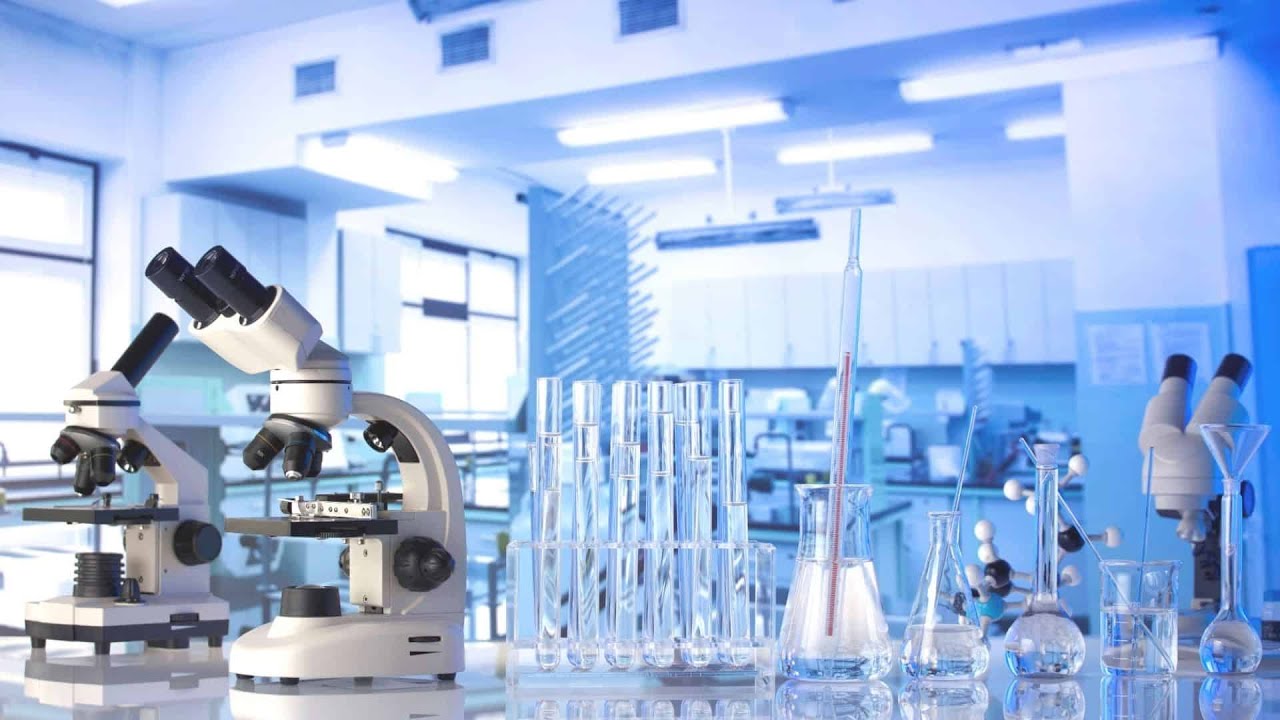
Laboratory equipment comes in a wide variety of forms to serve different scientific purposes. From basic thermometers and Bunsen burners to complex machines capable of analyzing molecular structures, laboratories could not function without the proper tools. Let's take a closer look at some of the most common and important types of equipment found in labs.
Microscopes
One of the fundamental pieces of equipment in any laboratory is the microscope. Microscopes allow researchers to see cellular and molecular structures that are invisible to the naked eye. Different types of microscopes serve various functions. Light microscopes use visible light and magnification lenses to examine small organisms, cells, and tissue samples. Electron microscopes use a beam of electrons instead of light for orders of magnitude higher resolution, enabling the examination of viruses and other nano-scale particles. Confocal laser scanning microscopes capture optical sectioning images through fluorescent molecular labeling. With their ability to reveal microscopic details, microscopes remain indispensable instruments across many scientific disciplines.
Centrifuges
Centrifuges are machines that spin liquid or gas samples at high speeds, using centripetal force to separate components by mass density or sedimentation rate. Clinical and research laboratories commonly use benchtop centrifuges for tasks like extracting plasma from blood or purifying DNA and RNA samples. Larger ultracentrifuges can achieve much higher g-forces through faster spin speeds, allowing for the fractionation of cellular organelles, viruses, and proteins. Differential centrifugation techniques separate materials based on their buoyant densities, separating particles such as mitochondria and ribosomes from cell homogenates. Isopycnic centrifugation forms density gradients for more precise fractionation of subcellular components.
Pipettes and Micropipettors
Handling small volumes of liquid is essential in many laboratory procedures like DNA amplification or chemical assays. Manual pipettes with adjustable volume settings allow for precise dispensing and aspirating in the microliter range. More accurate and consistent measurements require electronic micropipettors that operate on the principles of positive displacement. Multichannel pipettors can transfer multiple samples simultaneously for higher throughput. The popularity of automation has increased demand for programmable electronic pipetting instruments capable of serial dilutions and reagent additions across large sample numbers. Whether manually or robotically operated, pipettes remain a mainstay for quantitative microliter liquid handling.
Chromatography Instruments
Chromatography separates mixtures by exploiting differences in how compounds distribute between a moving fluid phase and a stationary retention material. Gas chromatography uses an inert gas carrier to move vaporized samples through a long capillary column coated with a nonpolar or polar stationary phase. Liquid chromatography pumps a pressurized liquid mobile phase through a column packed with tiny silica beads or polymer particles. Thin layer chromatography develops samples on coated glass or aluminum plates for portable analysis. With applications from drug discovery to food purity testing, chromatography instruments provide analytical separation power through variations in mobile phase chemistry and column properties. Modern innovations like ion mobility spectrometry provide new modes of gas chromatography analysis.
Spectrophotometers
Absorption and emission spectroscopic techniques underlie many scientific assays and diagnostic tests. Benchtop UV-visible spectrophotometers quantify the absorption of light by molecular constituents, enabling applications from DNA quantification to protein assays. Monochromators tune light sources across wavelength ranges for high resolution absorption measurements. Fluorescence spectrophotometers excite chromophores and fluorophores with specific excitation wavelengths before measuring the wavelength and intensity of light emitted. Infrared spectrometers analyze molecular vibrations to identify organic compounds. With high sensitivity and information-rich spectra, spectrometers play a crucial analysis role in clinical, food, materials, and environmental testing laboratories. Advances in miniaturization, detectors, and software continue expanding the capabilities of these powerful analytical instruments.
Titration Apparatus
Titration instruments automate the quantitative gravimetric and volumetric analysis techniques developed over a century ago. Automated titrators dispense precise volumes of titrant and indicator to equivalence points based on color changes, pH shifts, or electrode readings. Potentiometric titrators facilitate acid-base and redox titrations through glass electrode detection of changing proton or oxidation-reduction potentials. These benchtop instruments free analysts from manually performing repetitive titration processes to determine unknown concentrations in solutions. With applications in quality control, environmental monitoring, and undergraduate teaching labs, automated titration systems enhance efficiency and standardize results versus manual titration methods.
In Summary, this overview barely scratches the surface of the wide range of specialized laboratory apparatus applied across diverse scientific disciplines. From Bunsen burners and analytical balances to PCR thermocyclers and electron microscopes, laboratory equipment empowers investigations and discoveries by extending human capabilities to probe the microscopic world and perform complex experiments. Continued instrumentation advances will surely develop new modalities to push scientific frontiers even further. Properly equipped laboratories remain the engines driving new insights and applications across science and technology.